
In the food and FMCG industry, cost pressure is unavoidable. Brand owners, distributors, and procurement teams are constantly challenged to protect margins while remaining competitive in crowded categories. This pressure often leads to a familiar question during sourcing discussions: who can offer the lowest manufacturing cost?
While price is an important factor, relying on short-term cost savings as the primary decision driver frequently creates bigger problems in the long run. In noodle manufacturing and private label food production, the lowest quotation rarely reflects the true cost of doing business over time.
Brands that prioritise long-term manufacturing partnerships consistently outperform those that chase the cheapest option order by order. The difference lies not only in pricing, but in stability, quality, innovation, and the ability to scale sustainably.
At Vit’s Noodles, we have worked with both transactional buyers and long-term partners across local and international markets. The contrast in outcomes is clear. Long-term partnerships build stronger brands, smoother operations, and healthier profitability.
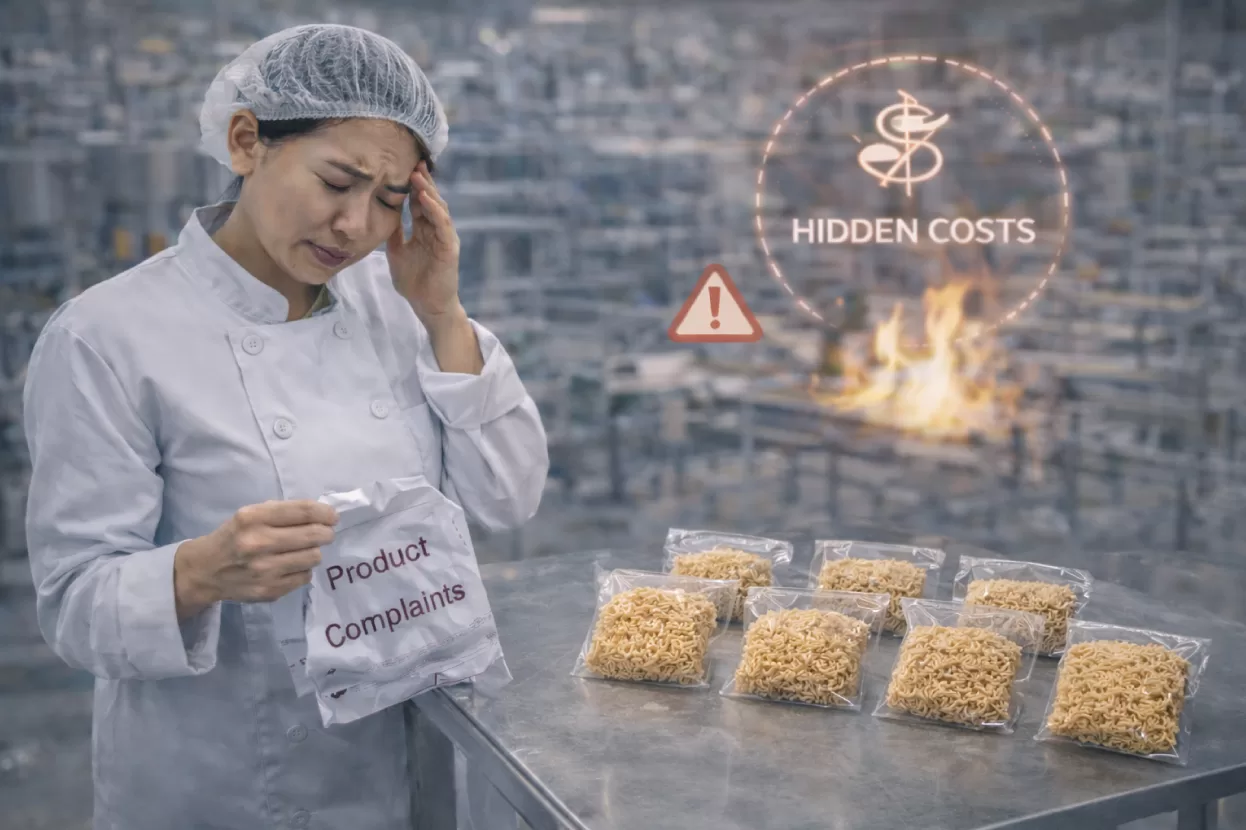
The Hidden Costs Behind Low Manufacturing Prices
A low manufacturing cost often looks attractive on paper, especially during early-stage brand development or aggressive expansion phases. However, pricing alone rarely tells the full story.
Manufacturing costs that appear competitive upfront may exclude factors such as quality consistency, supply reliability, compliance readiness, and operational support. Over time, these gaps surface as hidden costs that erode the initial savings.
In noodle manufacturing, even minor variations in raw material sourcing, production parameters, or drying processes can affect texture, taste, and shelf stability. These inconsistencies may not be obvious in the first shipment but become increasingly noticeable as volumes grow or when products reach different markets.
Brands then face increased customer complaints, product returns, reformulation expenses, or even reputational damage. At that point, the cost advantage disappears, replaced by operational firefighting.
Long-term manufacturing partners reduce these risks by building deep familiarity with product specifications, quality benchmarks, and brand expectations. This understanding translates into fewer surprises and greater predictability over time.
Why Stability Matters More Than Initial Savings
Stability is one of the most undervalued assets in manufacturing relationships. When a brand frequently switches suppliers to chase marginal cost reductions, it sacrifices accumulated knowledge and process alignment.
Each change requires onboarding, specification alignment, trial runs, quality verification, and internal coordination. These transitions consume time and resources that are rarely accounted for in cost comparisons.
In contrast, a long-term manufacturing partnership allows both parties to continuously refine processes. Production teams become familiar with specific formulations, packaging requirements, and quality tolerances. Over time, this familiarity reduces error rates and improves efficiency.
For growing noodle brands, stability also supports accurate forecasting and production planning. Manufacturers who understand a brand’s seasonal patterns, promotional cycles, and growth trajectory can allocate capacity more effectively. This reduces last-minute production bottlenecks and improves on-time delivery performance.
Short-term savings may reduce unit cost temporarily, but stability protects revenue and customer trust over the long term.
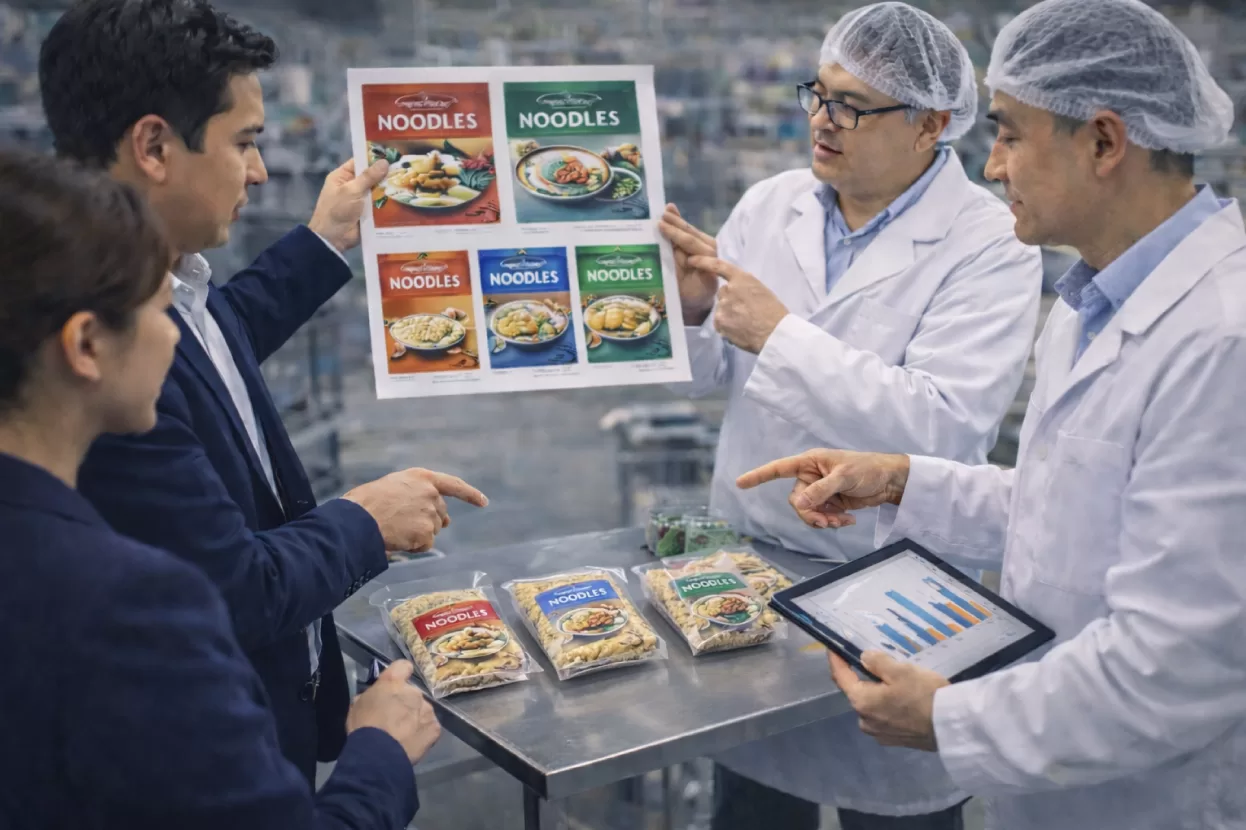
Long-Term Partnerships Improve Cost Efficiency Over Time
There is a common misconception that long-term manufacturing partnerships are more expensive. In reality, they often deliver better cost control when viewed across multiple years rather than individual purchase orders.
As trust develops, manufacturers are more willing to collaborate on cost optimisation initiatives that do not compromise quality. This includes refining formulations, improving yield, reducing material waste, and optimising packaging configurations.
Volume planning also becomes more accurate. With better visibility into future demand, manufacturers can secure raw materials more strategically and reduce exposure to market volatility. These efficiencies are difficult to achieve in short-term or transactional relationships where uncertainty remains high.
For private label noodle manufacturing, long-term partnerships also allow manufacturers to invest in process improvements and equipment upgrades that directly benefit their partners. These investments are rarely justified for one-off or price-driven projects.
The result is a more sustainable cost structure that supports both competitiveness and profitability.
Consistency as a Foundation of Brand Trust
Consumers may never see the manufacturing facility behind a product, but they experience its output every time they cook or eat it. Consistency in taste, texture, cooking performance, and packaging quality is what builds brand loyalty.
Frequent changes in manufacturers increase the likelihood of subtle variations that consumers notice, even if internal teams consider them acceptable. Over time, these variations weaken brand trust and make it harder to retain customers.
In the noodle category, where competition is intense and switching costs for consumers are low, consistency becomes a key differentiator. A long-term manufacturing partner ensures that production processes remain stable and quality benchmarks are maintained.
This consistency is achieved through documented processes, ongoing quality control improvements, and shared accountability between brand owner and manufacturer. Instead of resetting standards with each new supplier, long-term partners continuously raise them.
Brands that value consistency understand that protecting brand equity is far more valuable than chasing small cost differences.
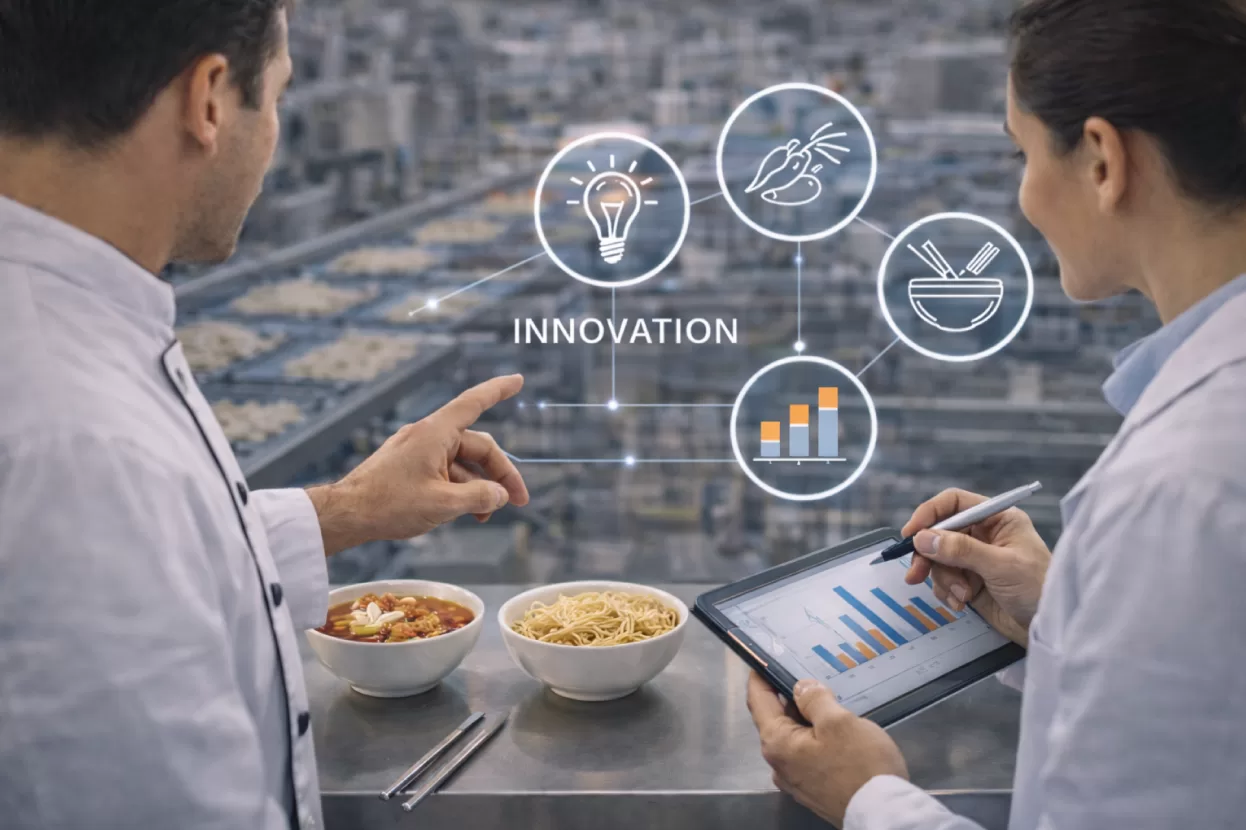
Faster Innovation Through Collaborative Relationships
Innovation is no longer optional in the food industry. Consumer preferences evolve rapidly, driven by health trends, dietary needs, flavour exploration, and convenience. Brands that fail to innovate risk losing relevance.
Long-term manufacturing partnerships create an environment where innovation becomes collaborative rather than transactional. Manufacturers who understand a brand’s positioning and long-term goals are better equipped to support product development initiatives.
This includes testing new ingredients, adjusting formulations to meet regulatory or consumer requirements, and developing new product formats. Manufacturers are also more willing to share insights from broader market exposure, including emerging trends and technical possibilities.
For OEM and private label noodle brands, this collaboration can significantly shorten development timelines and reduce trial-and-error costs. Instead of starting from scratch with each new idea, partners build on existing knowledge and experience.
Short-term suppliers focused solely on price rarely invest the same level of effort in innovation, as the return on investment is uncertain.
Compliance and Market Expansion Become Easier
As brands expand into new regions, regulatory and compliance requirements become more complex. Food safety standards, certification requirements, and retailer audits vary across markets and can be challenging to navigate without experienced support.
A long-term manufacturing partner familiar with these requirements can significantly reduce the burden on brand owners. Over time, manufacturers build documentation, processes, and certifications that support market expansion.
This accumulated knowledge becomes a strategic asset. Instead of repeatedly educating new suppliers, brands benefit from a manufacturing partner who understands their target markets and compliance needs.
For noodle brands exporting across Southeast Asia, the United States, or other regulated regions, this continuity saves time and reduces the risk of costly delays or non-compliance issues.
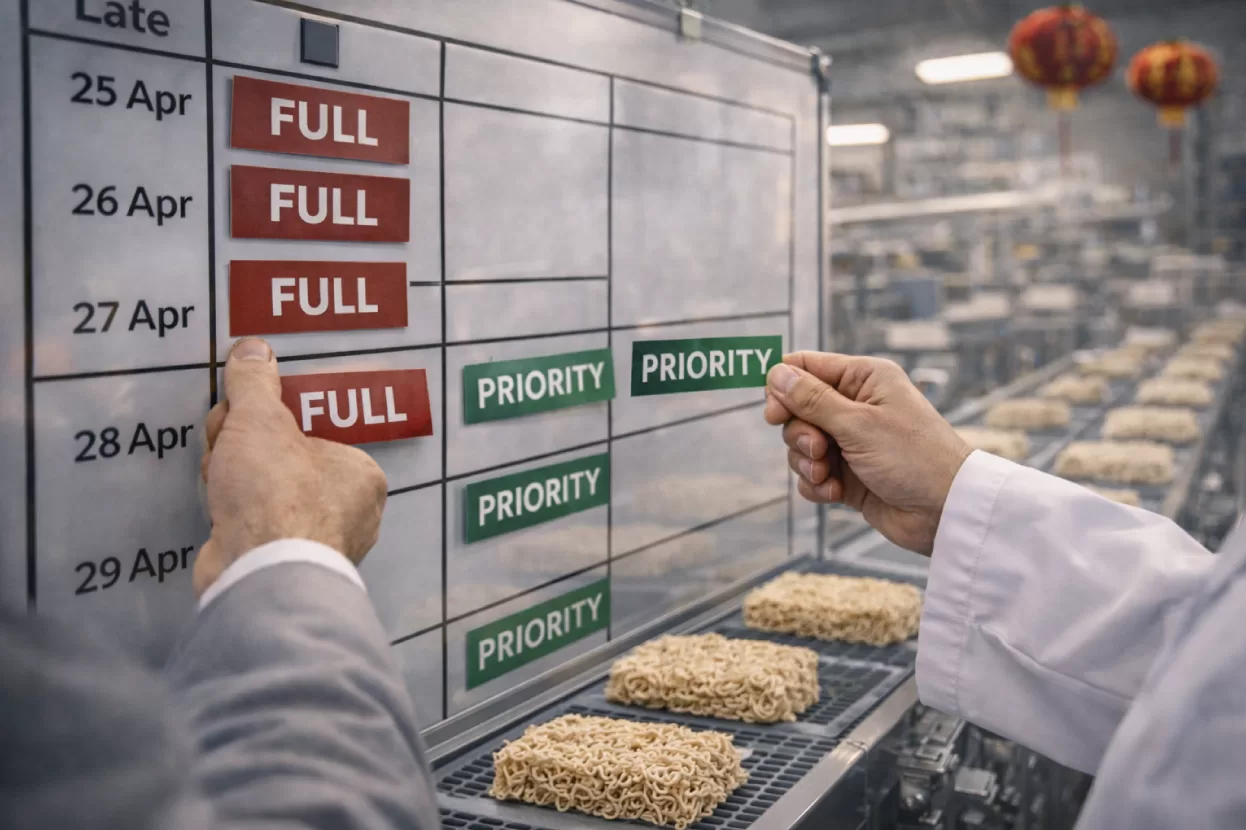
Capacity Priority During Peak Demand Periods
Peak demand periods reveal the true strength of manufacturing relationships. Festive seasons, promotional campaigns, and unexpected demand spikes place pressure on production capacity.
Manufacturers must make decisions about capacity allocation, and long-term partners are naturally prioritised. These partners have demonstrated commitment and reliability over time, making them lower-risk and higher-value relationships.
Transactional buyers, on the other hand, may face longer lead times or limited production slots during peak periods. For brands operating in fast-moving retail environments, this can result in missed opportunities, stockouts, and lost shelf space.
Long-term partnerships provide assurance that production needs will be supported when it matters most.
Shared Growth Creates Long-Term Value
The most successful manufacturing relationships are built on shared objectives rather than short-term negotiations. When both parties commit to a long-term partnership, the focus shifts from price discussions to strategic growth.
Manufacturers become more invested in a brand’s success, while brands gain a reliable production backbone that supports scaling. This alignment encourages transparency, proactive problem-solving, and continuous improvement.
Instead of renegotiating terms with every order, discussions evolve around efficiency gains, capacity planning, and market expansion. This approach creates value that extends beyond individual transactions.
Over time, manufacturers transition from being suppliers to becoming strategic partners who contribute to a brand’s competitive advantage.
Rethinking the Question of Cost
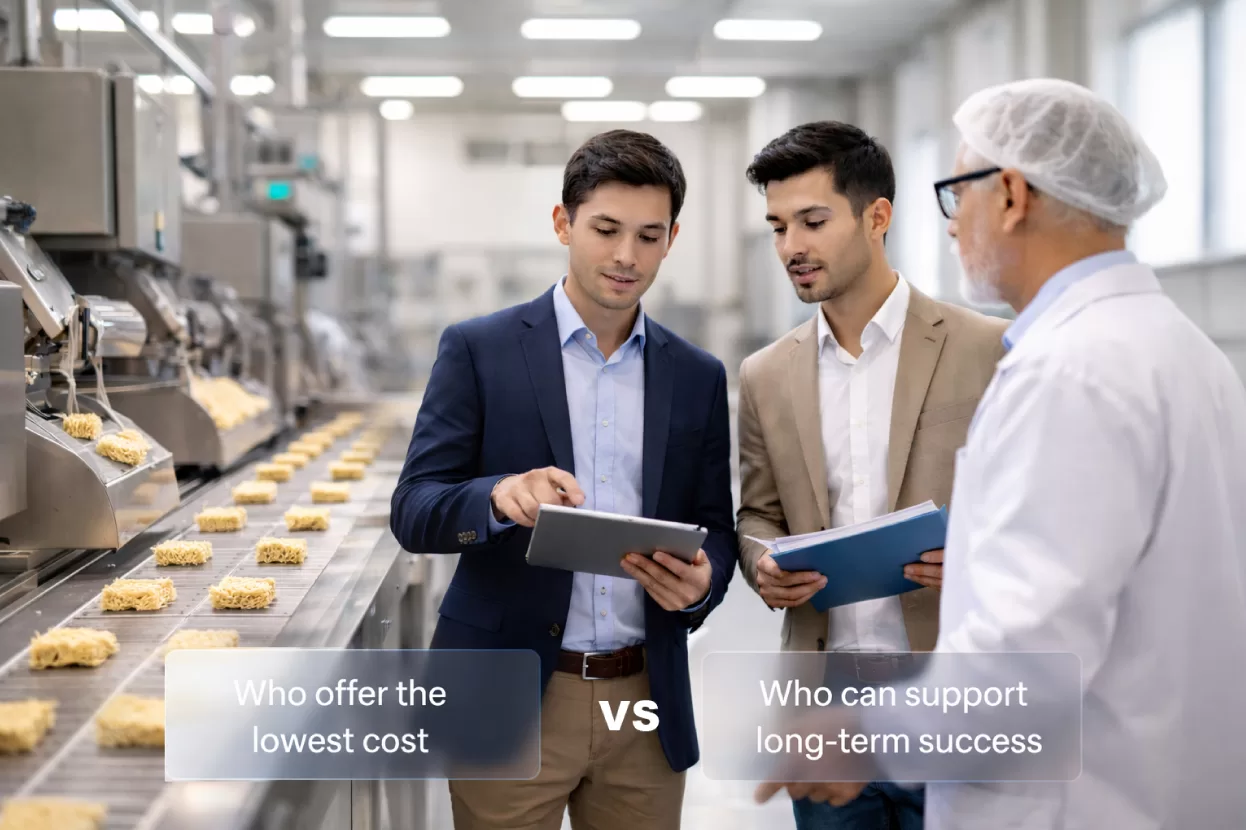
The critical question for brand owners should not be who offers the lowest manufacturing cost today. A more strategic question is who can support the brand’s success over the next five to ten years.
Evaluating a manufacturing partner requires looking beyond price to factors such as production consistency, quality systems, collaboration mindset, industry experience, and long-term commitment.
Short-term savings may offer immediate relief, but sustainable growth is built on reliability, trust, and shared vision.
Building for Sustainable Success, Not Just Short-Term Wins
In a highly competitive food industry, brands that focus exclusively on manufacturing cost often struggle to scale, differentiate, and maintain long-term relevance. While short-term savings may offer immediate financial relief, they rarely support sustainable growth.
Brands that invest in long-term manufacturing partnerships build stronger operational foundations. They benefit from consistent product quality, smoother supply chains, faster innovation cycles, and greater resilience during market fluctuations. Over time, these advantages compound, creating value that far outweighs marginal cost differences.
Long-term partnerships do not mean ignoring cost considerations. Instead, they place cost within a broader framework of value, reliability, and shared growth. When manufacturers and brand owners align on long-term objectives, efficiency improves naturally through collaboration rather than constant renegotiation.
At Vit’s Noodles, we believe strong brands are built through consistency, trust, and commitment. By working closely with our OEM and private label partners, we support products that perform not only at launch, but throughout every stage of growth.
Choosing the right manufacturing partner is not simply a sourcing decision. It is a strategic investment in the long-term success and credibility of your brand. If you are evaluating your next stage of growth or reassessing your manufacturing strategy, speak to our product expert team to learn how a long-term partnership with Vit’s Noodles can support your brand’s quality, consistency, and scalability goals.