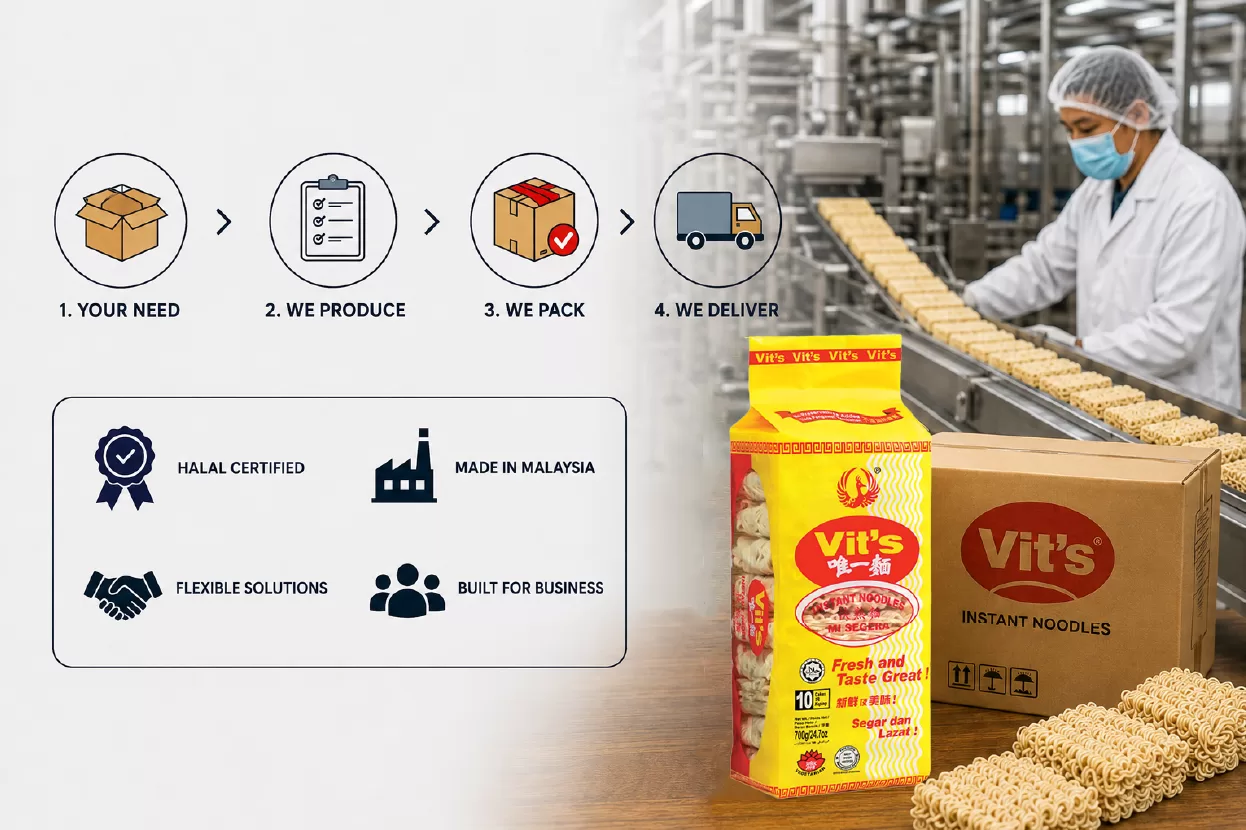

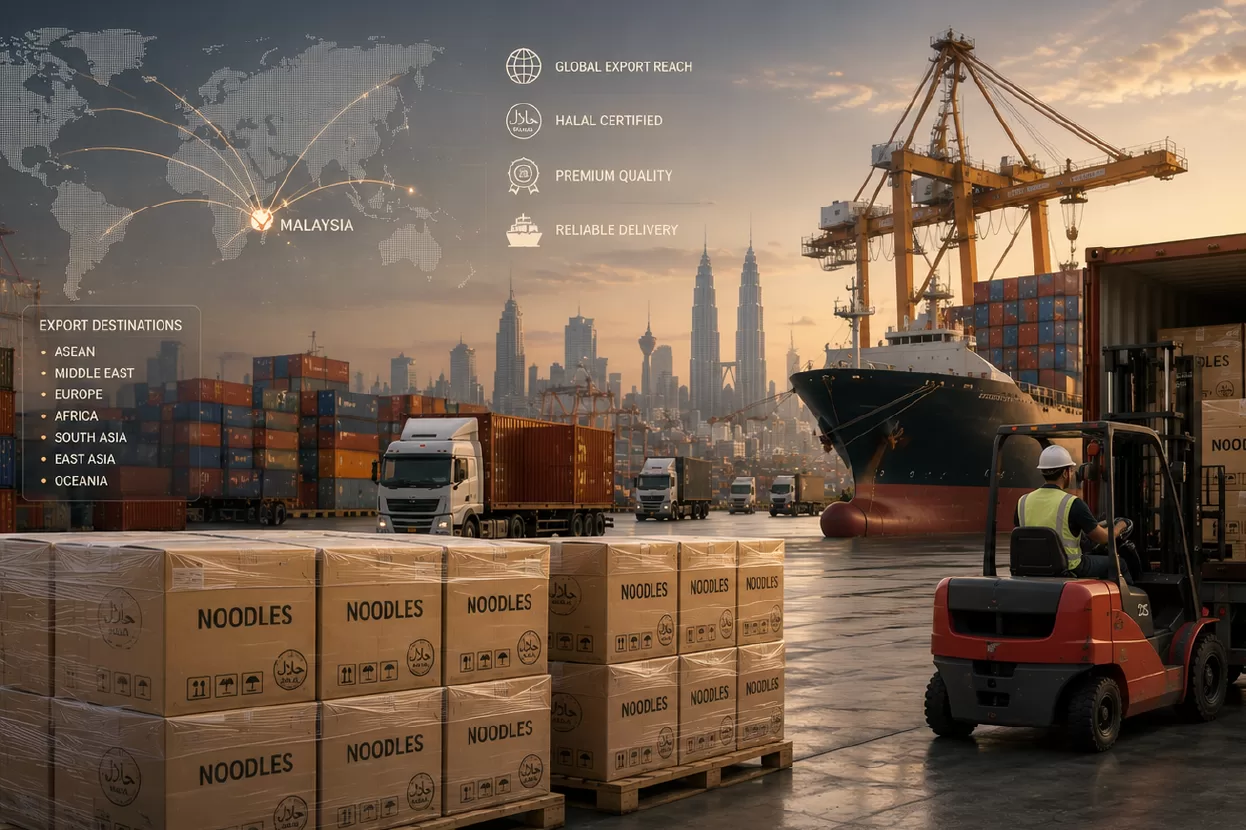
Malaysia has long held a strong position as one of the world's most reliable exporters of instant noodles. For business owners and corporations looking to launch their own noodle brand and take it global, this country offers a rare combination of manufacturing expertise, halal credibility, strategic location, and cost-competitive production. The opportunity is real. The question most business owners ask is: where do I actually start?
This guide breaks down the export process step by step, from choosing the right manufacturing partner to clearing customs in your target market, so that you can move from concept to shelf with confidence.
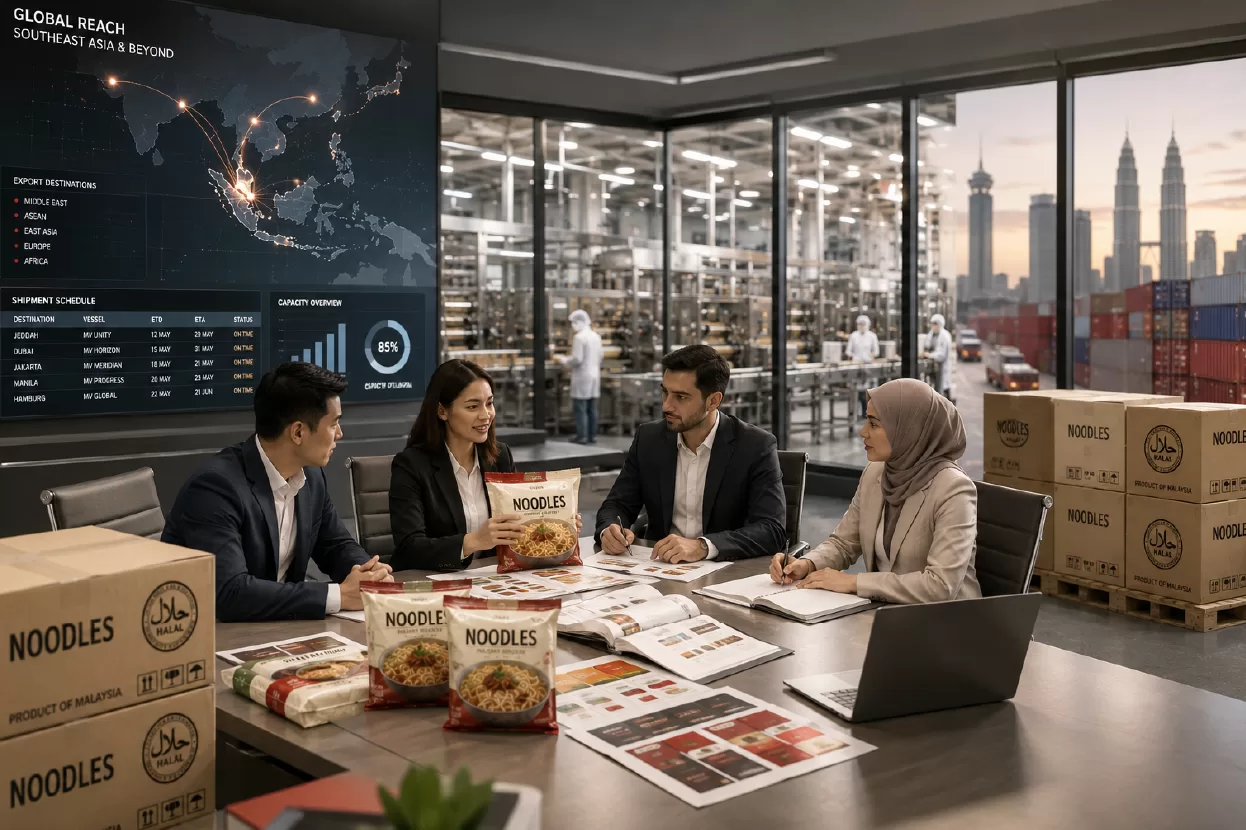
Why Malaysia is the Right Place to Build and Export a Noodle Brand
Before getting into the steps, it is worth understanding why Malaysia specifically gives your brand a head start in global markets.
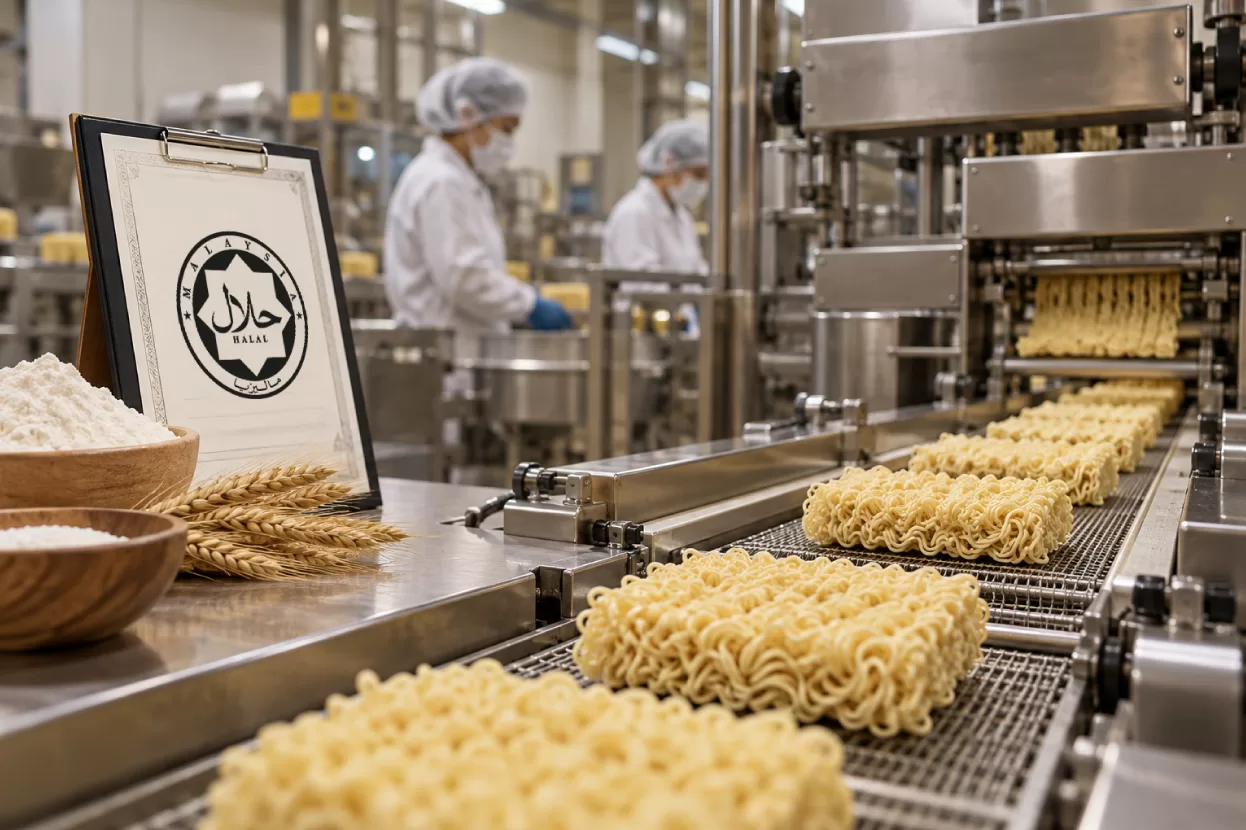
According to 6Wresearch, numerous Malaysian companies have expanded their reach to international markets, making Malaysia one of the top exporters of instant noodles worldwide, with the domestic instant noodle market expected to grow at a CAGR of 4.1% through 2032. This is an industry built on decades of manufacturing knowledge, established supply chains, and internationally recognised quality standards. The country's halal certification framework, governed by JAKIM (the Department of Islamic Development Malaysia), is among the most respected in the world. As noted in the Alibaba B2B Export Guide for instant noodles, JAKIM is globally respected and widely accepted as a halal certification authority, making Malaysian-manufactured products highly trusted across the Middle East, ASEAN, and Muslim-majority markets globally. Beyond halal, Malaysia's central position in Southeast Asia gives it excellent logistics access to markets across the region and beyond.
For any business owner wanting to build an export-ready noodle brand, partnering with a Malaysian manufacturer means starting with credibility already built in.
Step 1: Define Your Brand and Target Market Before Anything Else
The most common mistake business owners make when approaching noodle manufacturing for export is starting with the product before they have clarity on who they are selling to and where. Your target market shapes every decision that follows, including your noodle format, flavour profile, packaging design, certification requirements, and minimum order quantities.
Ask yourself these questions before approaching any manufacturer:
Who is your end consumer?
Are you targeting everyday consumers in Southeast Asia who value affordability, or health-conscious urban shoppers in the Middle East who are willing to pay a premium? Are you going after the food service sector, convenience retail, or e-commerce?
Which markets will you enter first?
Different markets carry different regulatory requirements. The UAE, Saudi Arabia, and other Gulf markets require JAKIM-recognised halal certification. European markets increasingly demand clean-label credentials and low-sodium formulations. Australia requires compliance with the Australia New Zealand Food Standards Code. Getting clear on your first one or two export markets lets you align your production setup and paperwork from day one, avoiding costly reformulation or relabelling later.
What is your price positioning?
This determines whether you need a standard fried noodle format or a premium air-dried product, and how you structure your packaging budget relative to your cost of goods.
Once you have answers to these questions, you are ready to have a productive conversation with a manufacturer.
Step 2: Choose a Manufacturer Who Is Export-Ready, Not Just Production-Ready
There is a significant difference between a manufacturer who can produce noodles and a manufacturer who is genuinely set up to support your export goals. When you are evaluating OEM or private label partners in Malaysia, look for these specific capabilities:
Halal certification that matches your target markets.
JAKIM certification is the gold standard for Malaysian-manufactured products, and it opens doors across the Middle East, ASEAN, and Muslim-majority markets globally. According to the Alibaba B2B Instant Noodle Export Guide, halal certification is often the single most important credential for exporters targeting these regions, requiring dedicated production lines or thorough cleansing protocols between halal and non-halal production. Confirm that your manufacturer holds an active JAKIM halal certificate and that their production lines meet this standard.
Experience with export documentation.
Exporting food products requires a set of documents beyond what is needed for domestic trade. According to DHL Malaysia's regulatory guide for food exporters, these include a Certificate of Origin issued by MITI (the Ministry of International Trade and Industry), a health certificate, a commercial invoice, a packing list, and market-specific certifications. A manufacturer with genuine export experience understands these requirements and can guide you through the process.
Quality systems that protect your brand.
When your product reaches a shelf in Dubai, Singapore, or Melbourne, it carries your brand name. Inconsistent quality in manufacturing does not just result in customer complaints; it can damage your market access permanently. Look for manufacturers who follow documented quality control processes and who can provide records of their production standards.
Formulation flexibility.
Export markets often require product adjustments. Sodium content, allergen declarations, and ingredient lists may need to vary by destination. A manufacturer with an in-house R&D capability can work with you to develop formulations that are compliant and market-ready across multiple geographies without starting from scratch each time.
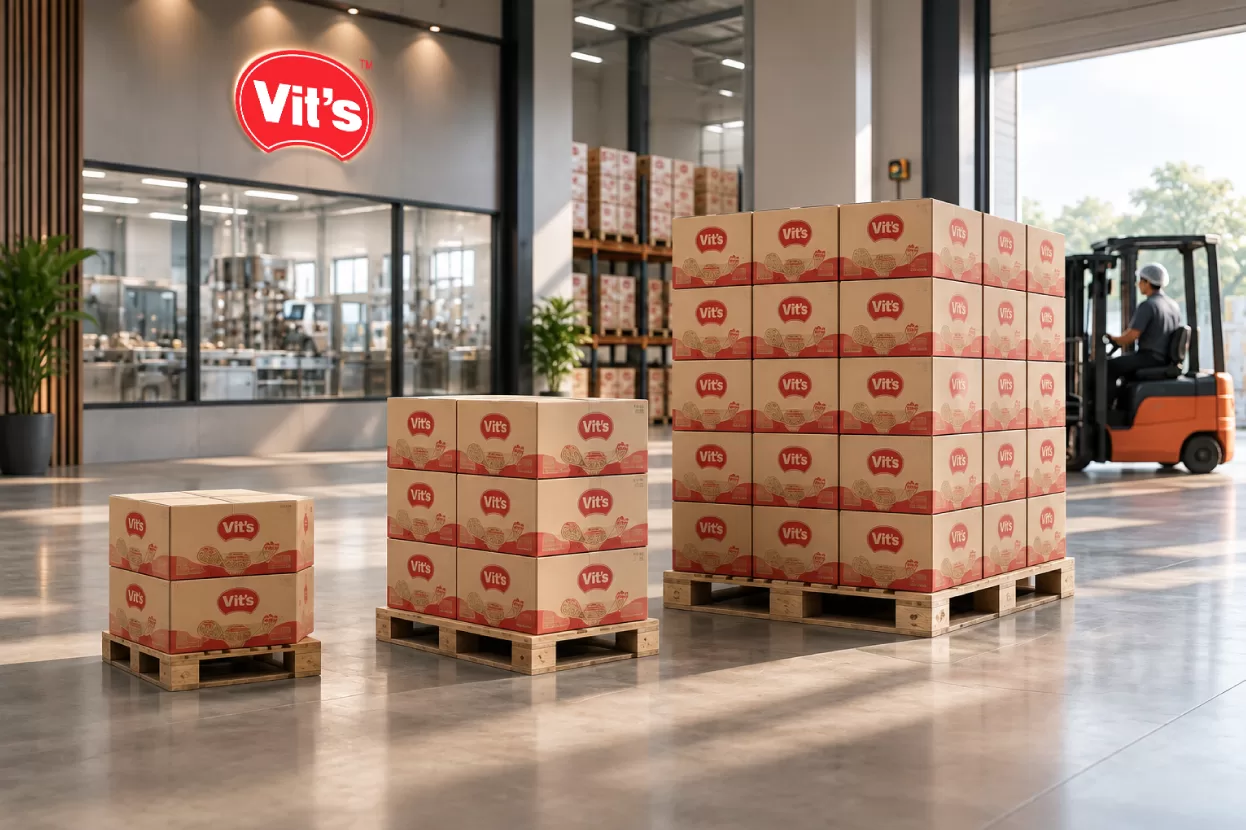
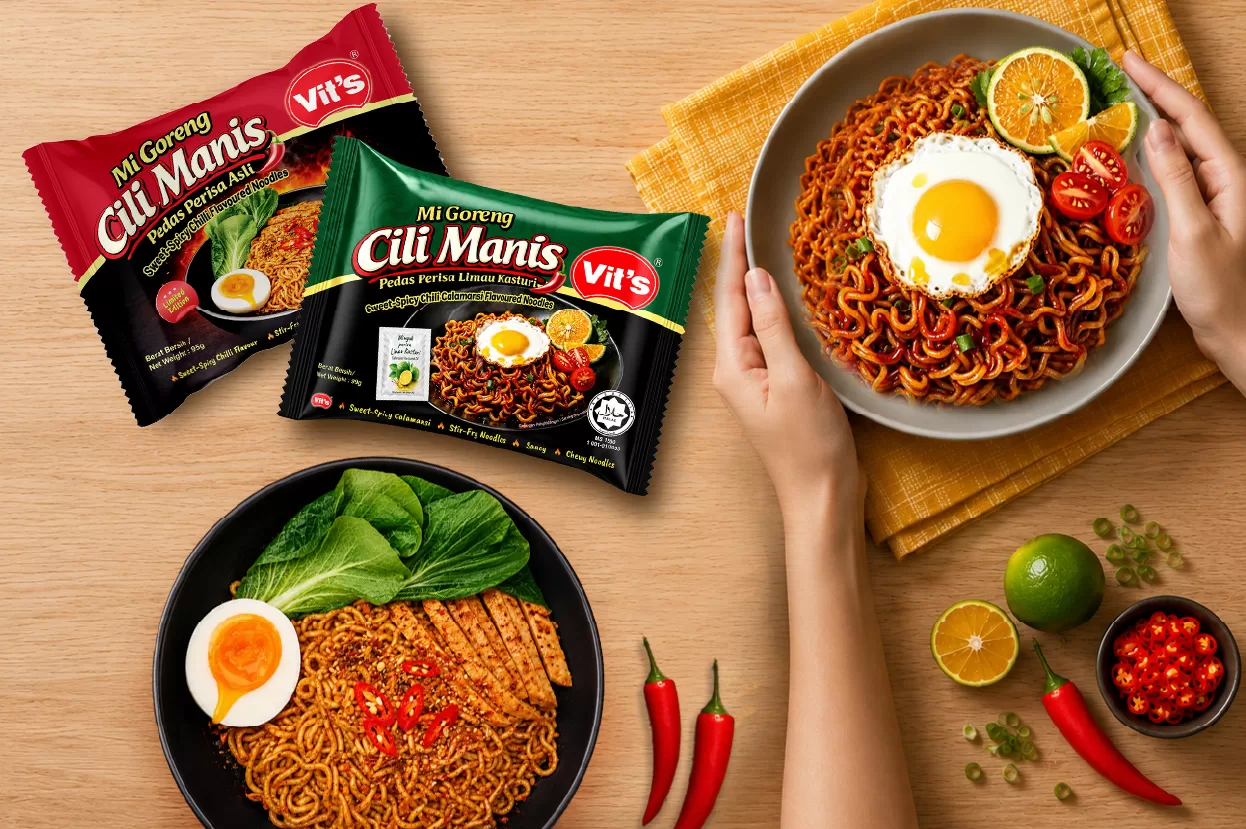
This is where Vit's Noodles becomes a relevant partner rather than just another manufacturer. With an established track record in OEM and private label production, JAKIM halal certification, and experience supporting brands targeting ASEAN, the Middle East, and beyond, Vit's brings the export readiness that many production-only manufacturers cannot offer. You are not just getting a factory; you are getting a partner with a stake in your brand's success abroad.
Step 3: Develop Your Product and Get It Export-Compliant
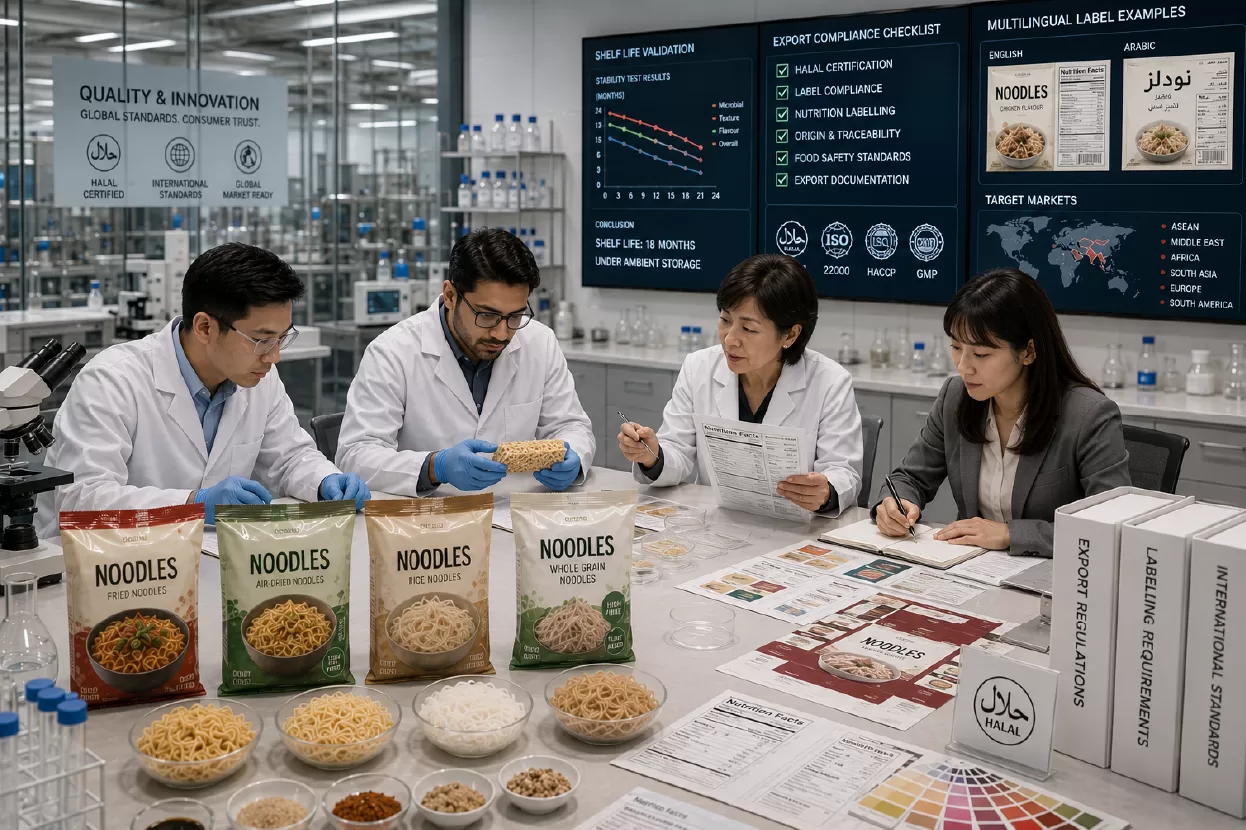
Once you have chosen your manufacturing partner, the product development and compliance phase begins. This phase typically takes four to eight weeks depending on the complexity of your formulation and the number of markets you are targeting.
Noodle format and formulation.
Your manufacturer's R&D team should guide you through the choice of noodle format (fried, air-dried, rice noodle, or specialty), flavour profile, and seasoning. As covered in our earlier guide on air-dried vs fried noodles, fried noodles remain the dominant format globally, especially in Asia, Africa, and parts of South America where affordability and familiarity are key, while air-dried noodles are growing rapidly in markets where reduced-fat, sustainable, and clean-label products are increasingly in demand. If you are targeting health-oriented markets, an air-dried format with lower fat content and a clean ingredient list will serve you better than a conventional fried variant.
Packaging design and labelling compliance.
Packaging is not just a branding exercise; it is a regulatory requirement. Every market has its own labelling laws. In most ASEAN markets, the product label must include the product name, net weight, ingredient list, nutrition information, manufacturer details, country of origin, and any applicable certification logos. In the UAE and Gulf markets, all labelling information must appear in both English and Arabic. As the Alibaba B2B Export Guide points out, packaging that prominently displays relevant certifications acts as a trust signal for consumers in these markets, and this should be built into your design from the start rather than treated as an afterthought.
Shelf life validation.
Export products travel further and sit in warehouses longer than domestic products. Your manufacturer should be able to confirm and document the shelf life of your product under standard storage conditions, and this shelf life should comfortably accommodate your logistics lead times.
Step 4: Sort Your Export Documents Before Your First Shipment
Getting your paperwork right is non-negotiable. A shipment held at customs is not just a delay; it is a cost, a relationship risk with your buyer, and in some cases a product that cannot be recovered. The core documents you will need for most export markets include:
Certificate of Origin (CO).
According to DHL Malaysia's export regulatory guide, this document is issued by MITI or a recognised Chamber of Commerce and certifies that your product was manufactured in Malaysia. It is required by most importing countries for tariff classification and duty assessment, and it also enables your buyers to access preferential tariff rates under Malaysia's various free trade agreements.
Halal Certificate.
For Middle Eastern, ASEAN, and African markets, a valid halal certificate from a JAKIM-recognised body is essential. According to ChemLinked's regulatory analysis, products must meet the basic halal criteria outlined in Malaysia's Trade Descriptions (Definition of Halal) Order 2011, which covers ingredient sourcing, processing conditions, and contamination controls. Ensure the certificate covers the specific products you are exporting and that it remains valid for the duration of your shipment window.
Health Certificate.
Many markets require a health or sanitary certificate issued by Malaysia's Ministry of Health or a relevant authority, confirming that the product is fit for human consumption and compliant with food safety standards.
Commercial Invoice and Packing List.
These must accurately reflect the goods being shipped, including product description, HS code (Harmonised System code for customs classification), quantity, weight, unit price, and total value. Errors in these documents are a common cause of customs delays.
Import Permits and Market-Specific Registrations.
Certain markets require advance product registration before a shipment can be imported. The UAE requires food products to be registered on the Montaji platform. China requires registration with GACC. DHL Malaysia's export guide advises that acquiring some of this paperwork can take considerable time, so beginning the process well in advance is essential.
Working with a manufacturer like Vit's, who has navigated these requirements across multiple export markets, means you are not piecing this together alone. The institutional knowledge of what each market requires shortens your time to first shipment considerably.
Step 5: Plan Your Logistics and In-Market Distribution
Manufacturing a great product and having the right documents in place is only part of the picture. How your product reaches the shelf, and who is responsible for selling it once it gets there, determines whether your export venture succeeds or stalls.
For most first-time brand exporters, the most practical approach is to work with an in-market distributor who already has retailer relationships in your target country. A distributor takes on responsibility for customs clearance, local storage, and channel distribution, while you focus on brand building, marketing support, and supply consistency. When selecting a distributor, look for one with experience in the food category and, ideally, with existing noodle or instant food lines in their portfolio. A distributor who already understands the category can place your product more efficiently and advocate for it more credibly with retail buyers.
For e-commerce-first strategies, platforms like Amazon, Noon, Shopee, and Lazada provide a lower-barrier route to market that allows you to test product-market fit before committing to full retail distribution. This is particularly useful for smaller initial volumes and for gathering consumer feedback before your first large reorder.
Step 6: Think About Scalability From Day One
One of the most consistent lessons from brands that successfully export is that the brands who scale well plan for scale before they need it. This means choosing a manufacturing partner whose production capacity can grow with your volumes, standardising your formulations so that quality is consistent across large batches, and building a documentation and compliance system that can be replicated efficiently as you add new markets.
Many brands make the mistake of optimising entirely for the lowest possible cost at the start, then find themselves with a manufacturing partner who cannot support their growth six months later. As we have explored in our guide on why low manufacturing cost rarely delivers the best margin, true margin is shaped not only by what you pay per unit, but by everything that happens before, during, and after production, including logistics, wastage, quality control, compliance, and supply reliability. A manufacturer who helps you get to market responsibly and at a quality level your consumers trust is far more valuable over a three to five year horizon than one who simply offers the cheapest unit price today.
At Vit's Noodles, the approach to OEM and private label partnerships is built around this longer view. Whether you are placing your first export order or scaling an established brand into new markets, the goal is a manufacturing relationship that grows with you rather than one that creates friction at every stage.
Ready to Export Your Own Noodle Brand from Malaysia?
Building an export-ready noodle brand from Malaysia is genuinely achievable for business owners and corporations who approach it with the right partner, a clear market strategy, and a commitment to quality and compliance. The opportunity across ASEAN, the Middle East, and beyond is growing. According to Market Data Forecast, the global noodles market is projected to reach USD 102.44 billion by 2034, growing at a CAGR of 5.15%. At the same time, according to 6Wresearch, the Malaysia Instant Noodles Market is anticipated to grow at a CAGR of 4.1% through 2032, reinforcing the country's position as a globally competitive manufacturing base. Malaysian-manufactured products, backed by JAKIM halal credibility and established export infrastructure, are well placed to capture a meaningful share of that growth.
If you are a business owner exploring OEM or private label noodle manufacturing for export, or if you are looking for a reliable manufacturer to support your existing brand's expansion, Vit's Noodles is ready to be that partner.
Contact us to discuss your export goals and find out how we can help you move from concept to shelf.