
Protein is having a moment. Walk into any gym, scroll through any fitness account on social media, or browse the health aisle of any major supermarket, and the message is the same: consumers want more protein in their diets, and they want it in formats that actually fit their lives. Protein bars, protein shakes, high protein snacks, and now increasingly, high protein noodles.
For a category that has spent decades being associated with cheap carbohydrates and questionable additives, the idea of instant noodles as a serious protein vehicle might sound surprising. But the market data and the product innovation happening right now tell a different story. Protein-fortified instant noodles are one of the fastest growing sub-segments within the global instant noodle market, and the opportunity for brands that move early is significant. Most markets are still in the early adoption phase, which means the window to establish a credible, differentiated product is open, but it will not stay open indefinitely.
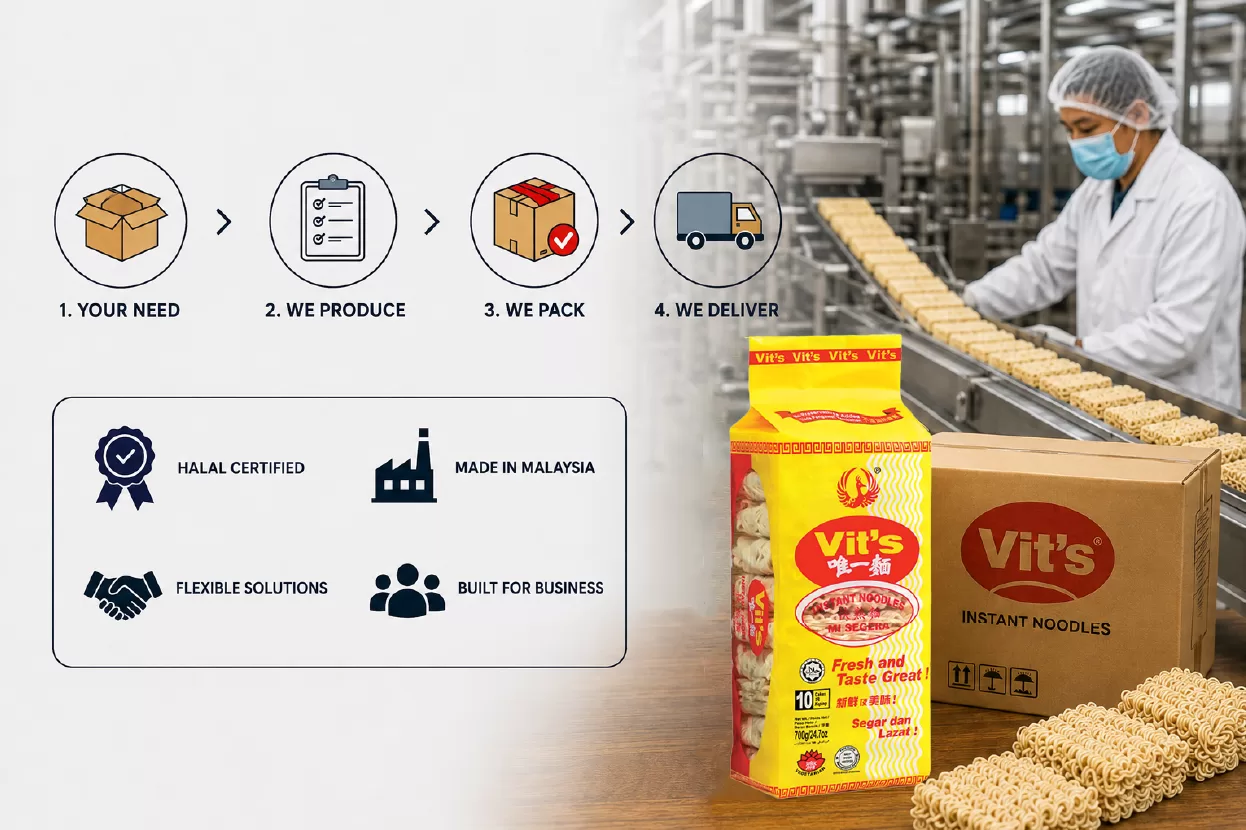
This article explores what high protein instant noodles actually are, why the global demand is real and accelerating, and how brands anywhere in the world can develop and bring their own high protein noodle product to market without building a factory. If you are a brand owner or entrepreneur already thinking about this, you can visit our OEM manufacturing page directly to understand how Vit's supports product development from formulation through to export.
What High Protein Actually Means in the Context of Instant Noodles
Standard instant noodles, made primarily from wheat flour, water, and salt, typically deliver between 6 and 10 grams of protein per serving. That reflects the naturally occurring protein in wheat, and while it is not nothing, it falls significantly short of what health-conscious consumers and fitness enthusiasts are looking for in a meal.
For context, the World Health Organization recommends that protein makes up between 10 and 15 percent of total daily energy intake for adults, which for a typical 2,000 calorie diet means roughly 50 to 75 grams per day. A standard instant noodle serving at 8 grams covers around 10 to 16 percent of that daily requirement, which leaves significant room for improvement, especially for people who are active, building muscle, or managing their weight through a higher protein intake.
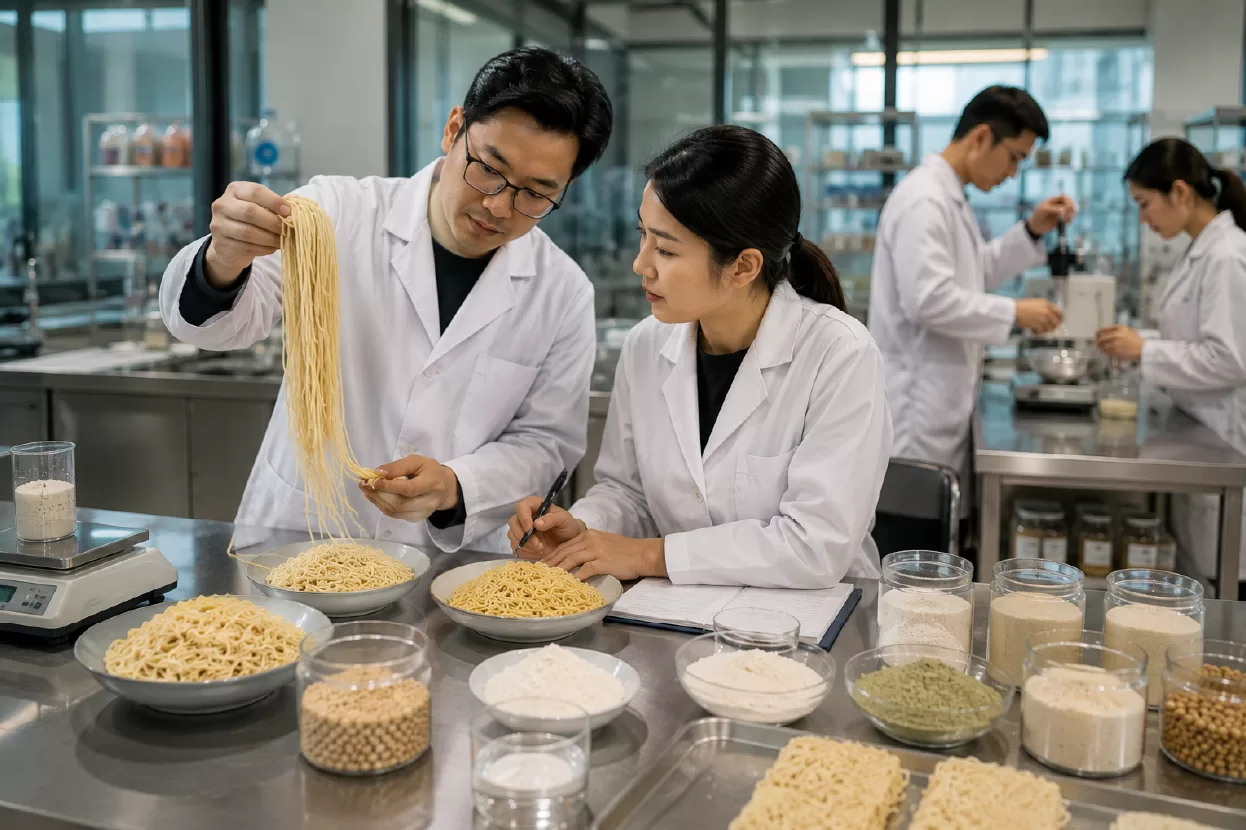
High protein instant noodles close that gap through deliberate formulation. The most common approach involves replacing a portion of wheat flour with high protein alternatives such as soy flour, chickpea flour, pea protein, or wheat gluten isolate, or adding functional protein ingredients like whey protein concentrate or plant-based protein blends directly to the noodle dough. Most products in this category target 15 grams of protein or more per serving, with premium products pushing toward 20 to 25 grams to position themselves as post-workout meals or meal replacements.
The challenge is that adding protein to a noodle is not as straightforward as adding it to a shake. Protein ingredients interact with starch and gluten in ways that affect texture, elasticity, cooking behaviour, and taste. A high protein noodle that turns mushy on cooking, breaks apart in the bowl, or tastes noticeably different from a conventional noodle will not survive in the market regardless of its nutritional credentials. Getting the formulation right requires genuine technical expertise in noodle manufacturing, not just knowledge of nutritional ingredients. This is why the choice of manufacturing partner is one of the most consequential decisions a brand in this space will make.
Why the Market Is Moving and Why Now Is the Right Time
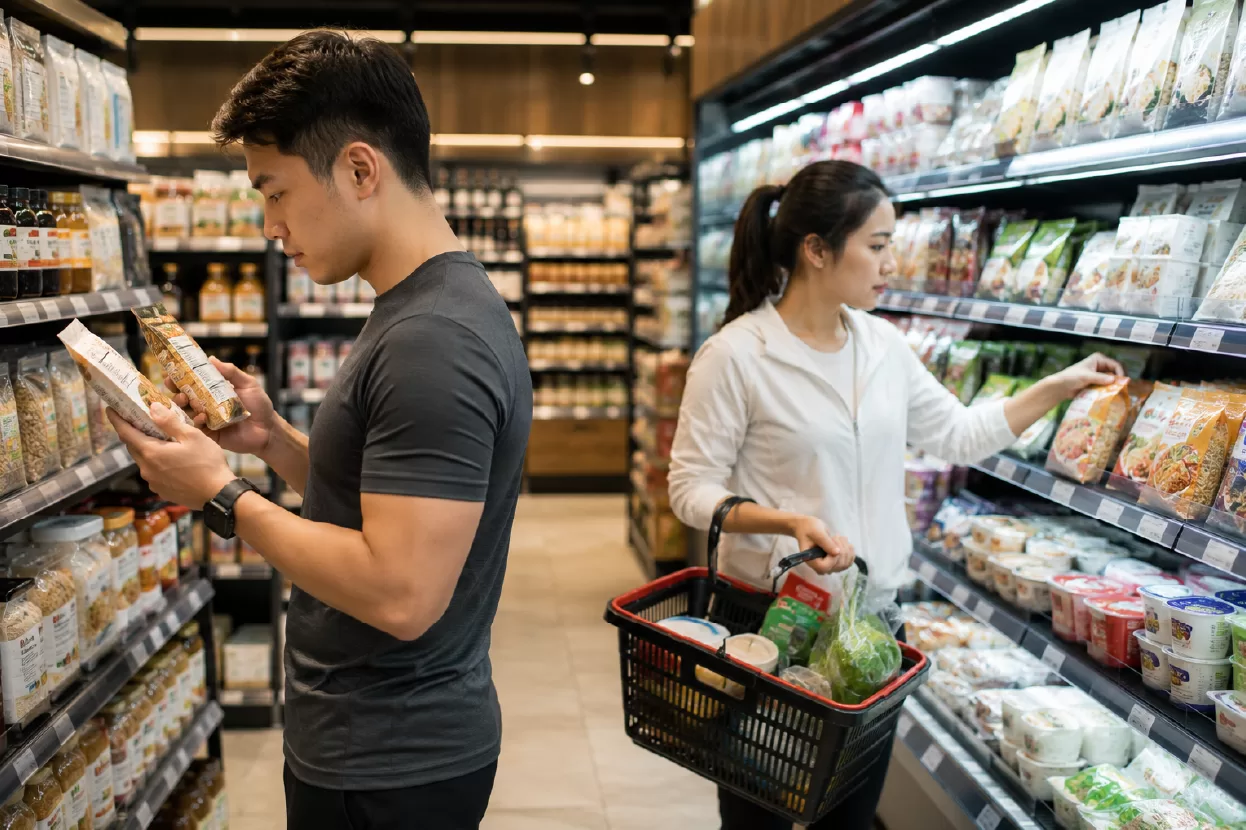
The shift toward high protein food products is not a trend driven by a single viral moment. It reflects structural changes in how consumers across the world think about food, health, and convenience, and those changes are accelerating rather than fading. Whether in Southeast Asia, the Middle East, Australia, or Europe, consumers are increasingly reading nutrition labels, comparing protein content across products, and making purchasing decisions based on health credentials rather than price alone. The rise of gym culture, sports nutrition awareness, and clean eating movements has created a global consumer base that is actively seeking protein across every meal format, including convenience food.
The generation that grew up eating instant noodles as an affordable staple has grown into adults with disposable income, fitness goals, and a clear preference for products that align with their values. They are not abandoning convenience food. They are demanding that it evolve. High protein instant noodles sit exactly at that intersection: the speed and ease of conventional instant noodles, with the nutritional credentials that health-conscious consumers across every market are willing to pay a meaningful premium for. The industry calls this nutritious convenience, and it is one of the clearest growth vectors in the global packaged food market right now.
The structural enabler that makes this opportunity particularly accessible for new brands is e-commerce. Health-focused food products including high protein noodles have found their most receptive audiences online, where consumers can discover niche products, read detailed nutritional information, and buy without needing physical retail listings. A brand can launch a high protein noodle product online, build a customer base across multiple countries, gather genuine consumer feedback, and scale into retail once market demand is established. That sequence was not practical ten years ago. Today it is the standard playbook for functional food brands entering new markets.
The brands entering the functional noodle space now are establishing category positions that will be significantly harder to claim once the market matures. First-mover advantage in a growing niche is real, and the window for it is finite.
What High Protein Noodles Can and Cannot Do
A balanced perspective matters here, because overclaiming is one of the fastest ways to lose consumer trust in the health food space, and the consumers most likely to seek out high protein noodles are also the most likely to scrutinise nutritional claims carefully. High protein instant noodles can meaningfully increase the protein content of a convenient meal, support consumers working toward daily protein targets, and serve as a practical post-workout option or a filling weekday lunch. They can do all of this while maintaining the preparation speed and ease that makes instant noodles a global staple.
What they cannot do is replace a balanced diet. The same sodium considerations that apply to conventional instant noodles apply to high protein versions, and the strongest products in this category address protein, fibre, and sodium together rather than optimising for protein alone. Many protein ingredients do not inherently contribute fibre, so fibre fortification is often incorporated alongside protein enhancement in well-formulated products. Consumers in this space are nutritionally literate, and they will notice when a product excels on one metric while ignoring others. The brands that win in this category are the ones that treat nutritional completeness seriously, not just protein content in isolation.
How Brands Are Bringing High Protein Noodle Products to Market
For entrepreneurs and food brand owners considering a high protein noodle product, the most common question is no longer whether the market opportunity is real. The data across every major region confirms that it is. The question is how to develop and produce a product that delivers on its nutritional claims, tastes good enough to earn repeat purchases, meets the halal, regulatory, and food safety requirements of the target market, and can be produced at a cost structure that makes commercial sense.
The answer for most brands, particularly those without existing food manufacturing infrastructure, is OEM manufacturing. Working with an experienced noodle manufacturer to develop and produce a custom formulation gives a brand access to production expertise, established quality systems, and regulatory compliance capability without the capital expenditure of building or owning a factory. The brand retains ownership of the recipe and the product, and can direct its resources toward marketing, distribution, and consumer relationships rather than the operational complexity of food production.
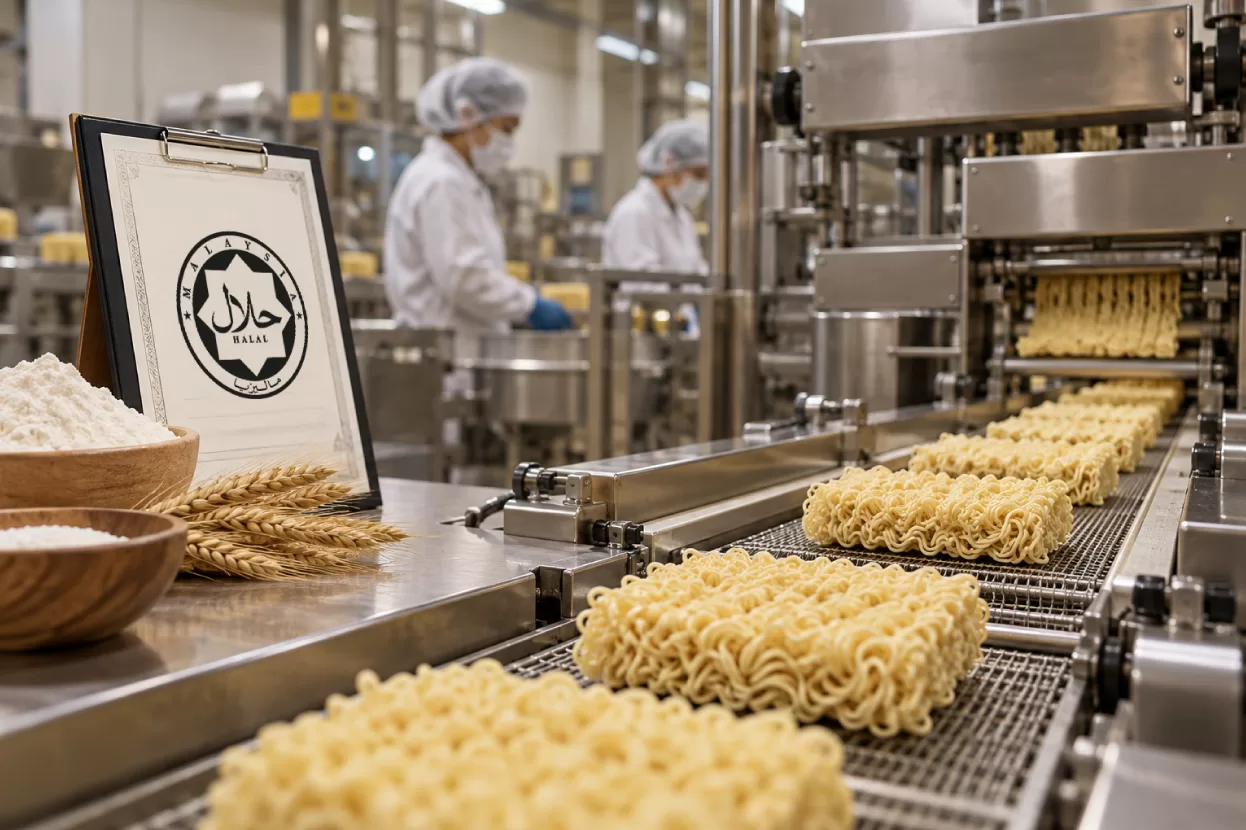
Malaysia is one of the most established bases for noodle OEM manufacturing in the world. The ecosystem here combines certified manufacturing facilities, deep technical expertise in noodle production, strong halal credentials recognised across Muslim-majority markets globally, competitive production costs, and proven export infrastructure that reaches ASEAN, the Middle East, Australia, Europe, and beyond. For international brands looking to source a high protein noodle product, a Malaysian OEM manufacturing partner provides manufacturing quality and export capability in a single relationship, which simplifies the supply chain considerably compared to developing a product in one country and sourcing manufacturing in another.
Case Study: How a Health-Focused Brand Launched a High Protein and High Fibre Noodle Through OEM
Situation
A health-focused brand approached Vit's with a clear product vision: a line of nutrient-rich instant noodles with elevated protein and fibre content, targeted at health enthusiasts and fitness-conscious consumers. The brand had strong marketing capability and a defined target audience, but did not want to invest in their own manufacturing facility. They needed consistent product quality, a bespoke formulation that could deliver on their nutritional claims, and a production partner who could handle the regulatory and quality compliance requirements that come with functional food products.
Action
The brand partnered with Vit's Noodles to access our production expertise, R&D capability, and certified manufacturing facility. Working together, we developed custom formulations using high protein and functional ingredients selected to meet the brand's nutritional targets while maintaining the taste and texture profile that would generate repeat purchases. Vit's handled the full production process including quality control, regulatory compliance, and halal certification requirements, while the brand concentrated its energy on consumer testing and preparing for their online launch.
Result
The product launched successfully through e-commerce channels. Within six months of launch, the brand recorded double-digit revenue growth and strong repeat purchase rates, reflecting both the genuine market demand for this product category and the consistent product quality that comes from a reliable manufacturing partnership. The OEM arrangement allowed the brand to innovate and scale without taking on the operational burden or capital risk of owning production infrastructure.
What to Look for in an OEM Manufacturing Partner for High Protein Noodles
Not all noodle manufacturers have the technical capability to develop and produce high protein formulations, and the difference between a manufacturer that can and one that cannot becomes apparent quickly in the development process. When evaluating a manufacturing partner for this type of product, the factors worth assessing carefully are these.
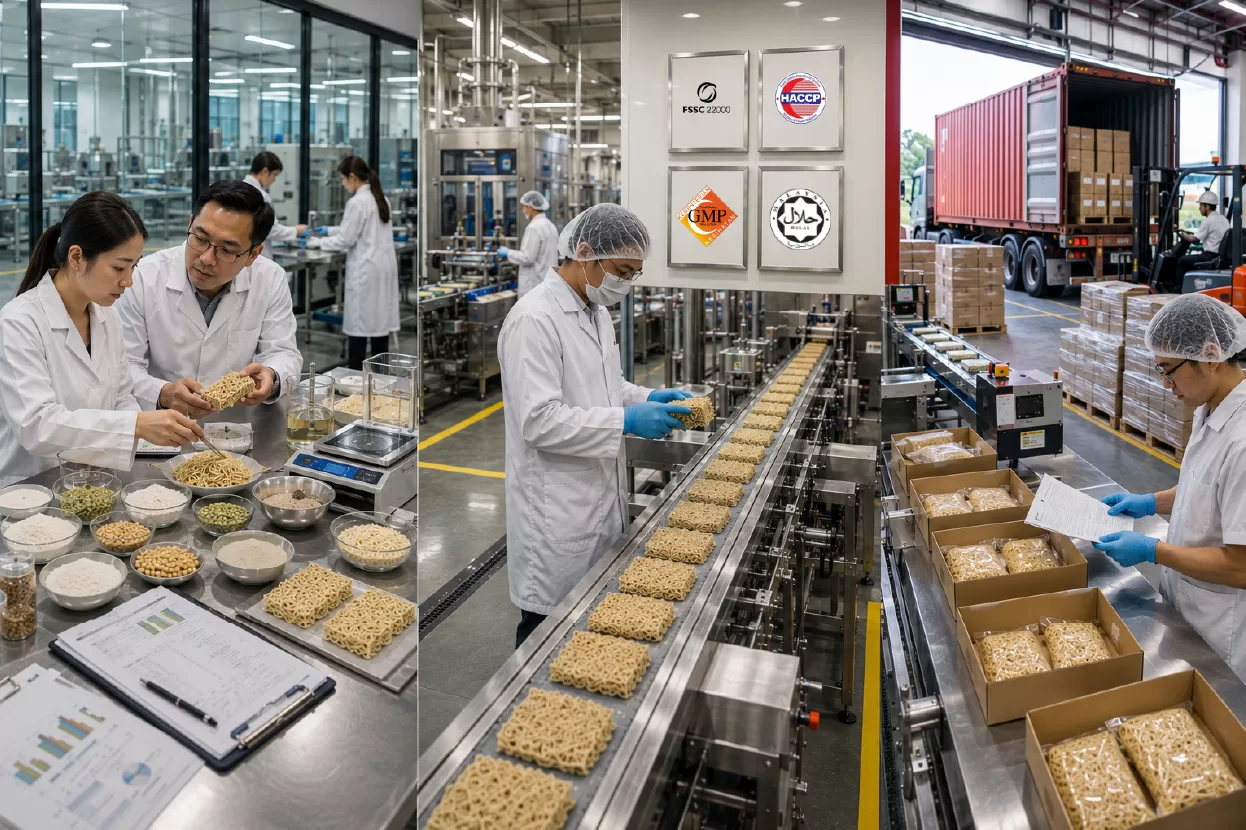
First, in-house R&D capability. A manufacturer that can only execute an existing recipe is not a development partner. If you are coming in with a nutritional target rather than a finished formula, you need a team that understands functional ingredient behaviour in noodle production and can iterate toward a product that meets both your nutritional specification and your sensory requirements. Second, demonstrable experience with protein ingredients specifically. Soy, pea, wheat gluten, and whey all behave differently in the production process, and a manufacturer claiming to handle high protein formulations should be able to point to products they have actually developed and produced.
Third, certifications that match your target markets. FSSC 22000, HACCP, GMP, and halal certification are the baseline for selling into most major retail and e-commerce channels globally, and particularly for reaching Muslim-majority markets in Southeast Asia and the Middle East. Fourth, export experience. If you are targeting markets outside the country of manufacture, your OEM partner needs demonstrable experience with export documentation, import compliance, and nutritional claim labelling requirements across different regulatory environments. And fifth, flexibility on production volumes. Early runs for a new product will typically be smaller than eventual volumes, and a manufacturing partner that can accommodate smaller initial quantities without penalising you on unit cost gives you the room to validate market demand before committing to full-scale production.
How Vit's Supports High Protein Noodle Development Globally
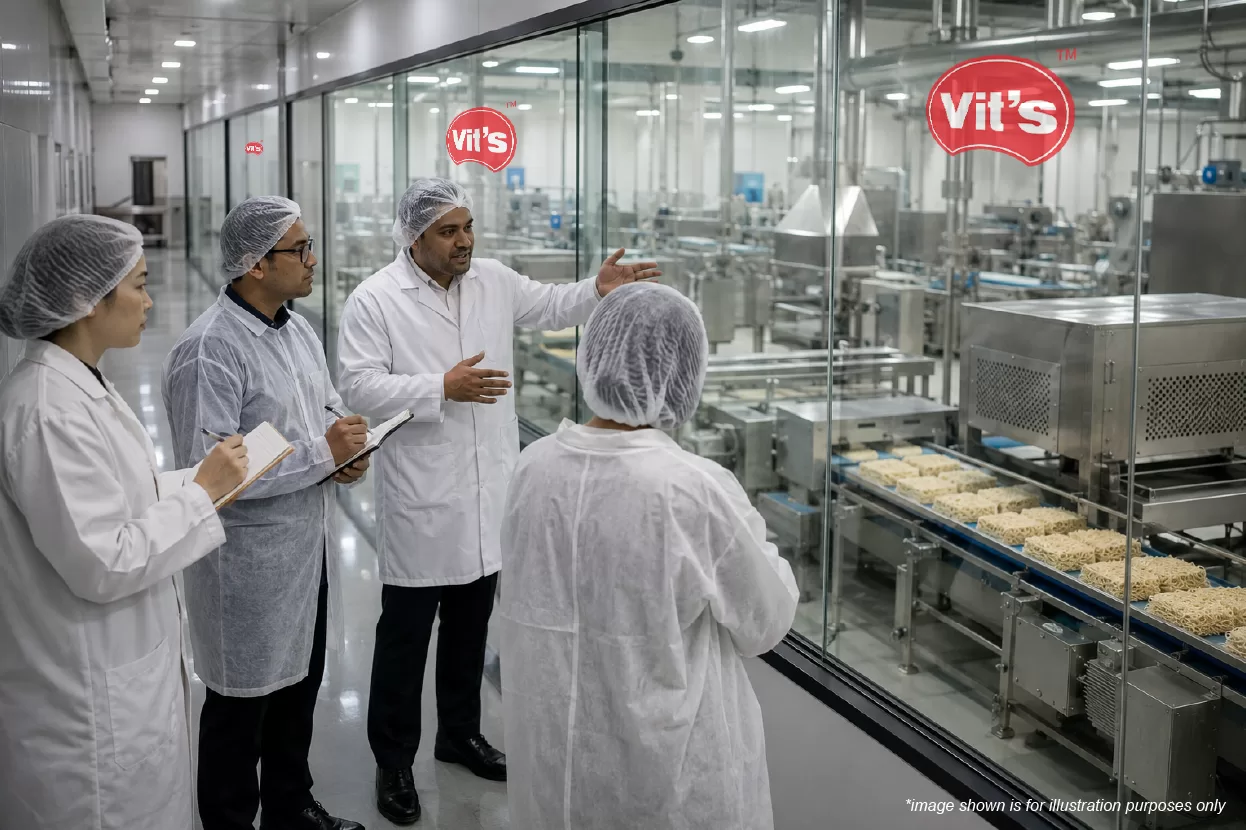
At Vit's, we have decades of noodle manufacturing experience and an in-house R&D team that has worked on functional noodle formulations including high protein and high fibre products for brands across multiple markets. Our facility holds halal certification, FSSC 22000, HACCP, and GMP accreditation, all verifiable on our certifications page. We supply to markets across ASEAN, the Middle East, Australia, and beyond, and our export experience means we understand the compliance, labelling, and logistics requirements that come with selling a functional food product internationally.
We work with brand owners at every stage of development. Some come with a detailed nutritional brief and need a manufacturing partner to execute it at scale. Others come with a market opportunity and need our R&D team to develop the formulation from scratch. We have done both, and we understand what each type of partnership actually requires from a manufacturer in terms of time, iteration, and technical support.
If you are exploring high protein noodle product development, contact our team here to discuss your product concept, nutritional targets, and intended markets. You can also browse our existing product range to understand the breadth of our manufacturing capability, and read more on the Vit's blog for further insights on noodle brand building and manufacturing.
Where Do You Go From Here?
High protein instant noodles represent a genuine and durable shift in what consumers want from convenient food, and that shift is playing out across every region where instant noodles are consumed. The consumer demand is established and growing. The route to market through e-commerce is accessible from virtually anywhere in the world. And the OEM manufacturing model means that launching a high protein noodle brand no longer requires owning a factory, employing food scientists, or being based in any particular country.
What it does require is a manufacturing partner with the right formulation capability, the right certifications, genuine export experience, and a real commitment to helping your product succeed wherever you intend to sell it. That is what Vit's is built to provide, for brands in Malaysia and for brands anywhere in the world.
If you are ready to explore what is possible, reach out to the Vit's team today. The conversation costs nothing, and it might be the first step toward a product your customers have been waiting for.