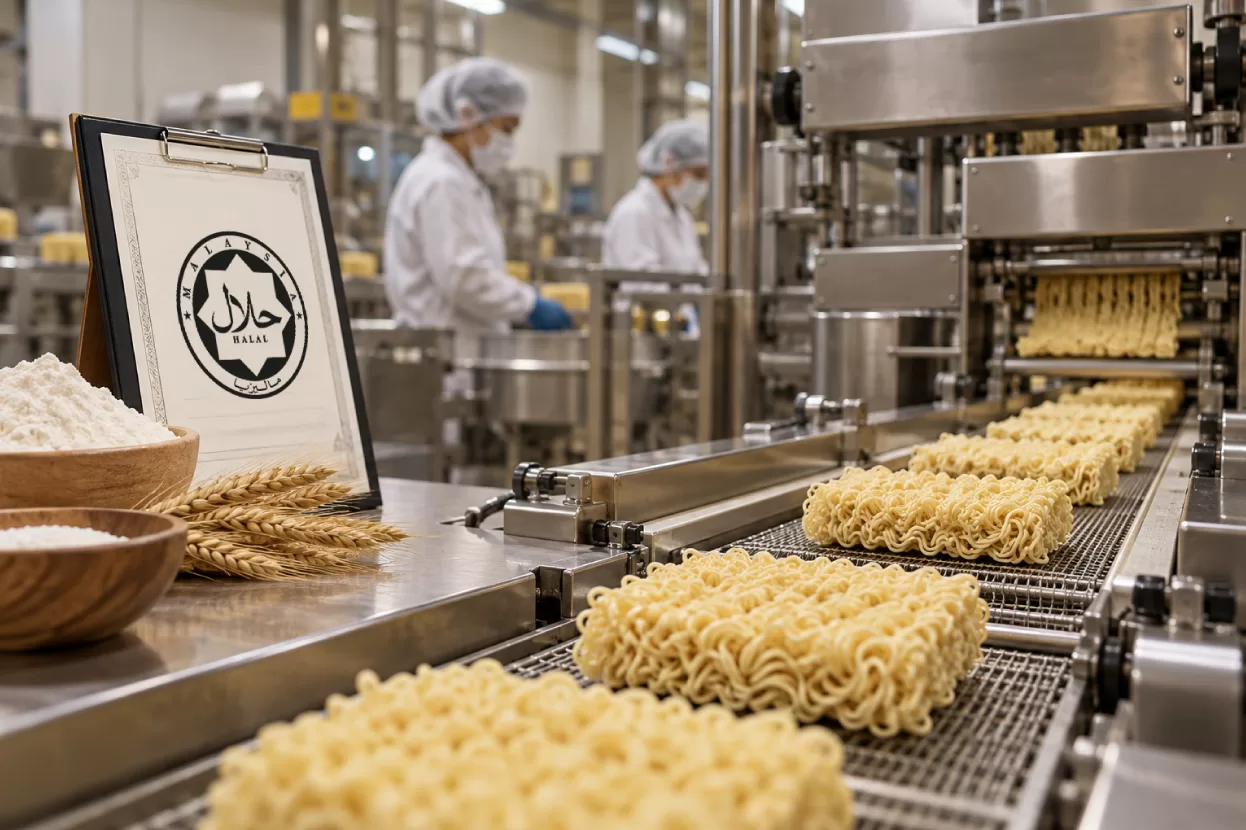
Most brand owners treat halal as a labelling question. They assume it is something applied near the end of the process, once the recipe is settled and the packaging is being finalised, and that any reputable manufacturer can arrange it.
That assumption costs brands market access, and it usually becomes apparent at the worst possible moment: after production has been committed, when the product is ready to ship and an importer asks for documentation that does not exist.
Halal is not a label. It is a supply chain standard, and it is decided by where and how your product is manufactured rather than by what you print on the pack. For any brand with export ambitions, particularly in Southeast Asia and the Middle East, the certification status of your manufacturer is one of the few sourcing decisions that directly determines which markets you can legally sell into.
This guide explains what halal certification actually covers, why the certifying body matters as much as the certificate, what Indonesia's current enforcement means for exporters, and the questions worth asking any manufacturer before you commit to a production run.
We write this from the position of a manufacturer that has operated under halal certification since 1980. It is the question we field most often from international buyers, and it is the one most likely to be asked too late in the process.
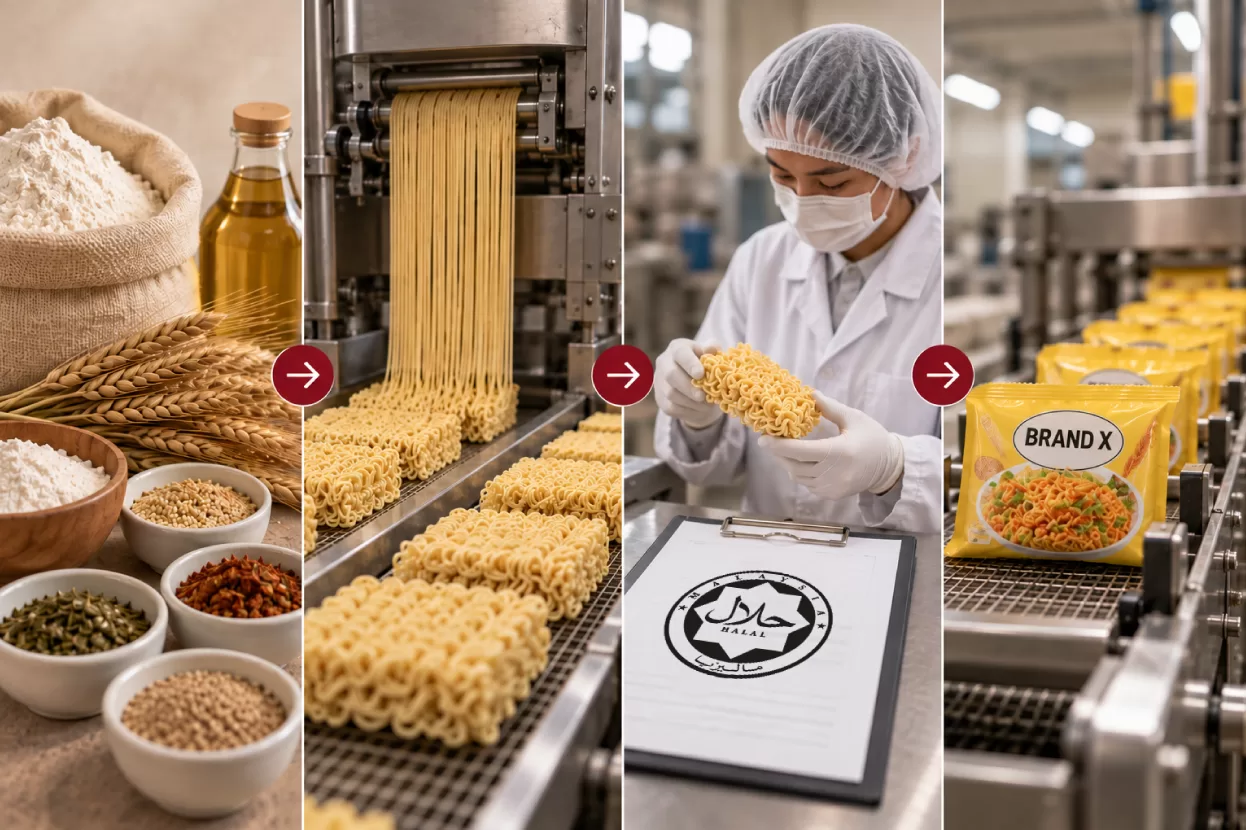
Halal covers the supply chain, not just the ingredients
The most common misunderstanding is that halal compliance is a matter of avoiding certain ingredients. Ingredient screening is part of it, but it is only the starting point.
A halal certified facility has to demonstrate control across the entire production chain. That includes the sourcing and documentation of every raw material and its supplier, the equipment and production lines the product runs on, cleaning and sanitisation procedures, storage and warehousing arrangements, logistics and transport, and staff training and awareness.
The principle underlying all of it is the prevention of cross contamination. A compliant ingredient that runs on a line which also handles non compliant product, without validated segregation and cleaning protocols in place, does not produce a compliant finished good.
This is why halal status cannot be retrofitted cheaply. A manufacturer without certification cannot simply apply for it on your behalf and have it resolved in a few weeks. The systems, documentation and supplier relationships either exist already or they have to be built, and building them is a facility level project rather than a product level one.
For instant noodles specifically, the points of attention are the frying oil and its source, seasoning and flavouring components including any animal derived ingredients or enzymes, emulsifiers and processing aids, and the supplier documentation behind each of them. Seasoning is usually where the complexity sits, because a single blend can involve a long list of sub ingredients from multiple suppliers, each of which needs its own halal status verified.
At Vit's, this supplier verification work sits upstream of any OEM or private label project rather than being triggered by one. Our raw material sourcing, frying oil, seasoning suppliers and production procedures already operate within a certified halal system, which means a partner brand inherits that framework instead of having to build it. In practice this is the difference between a compliance question that takes a conversation and one that takes a project.
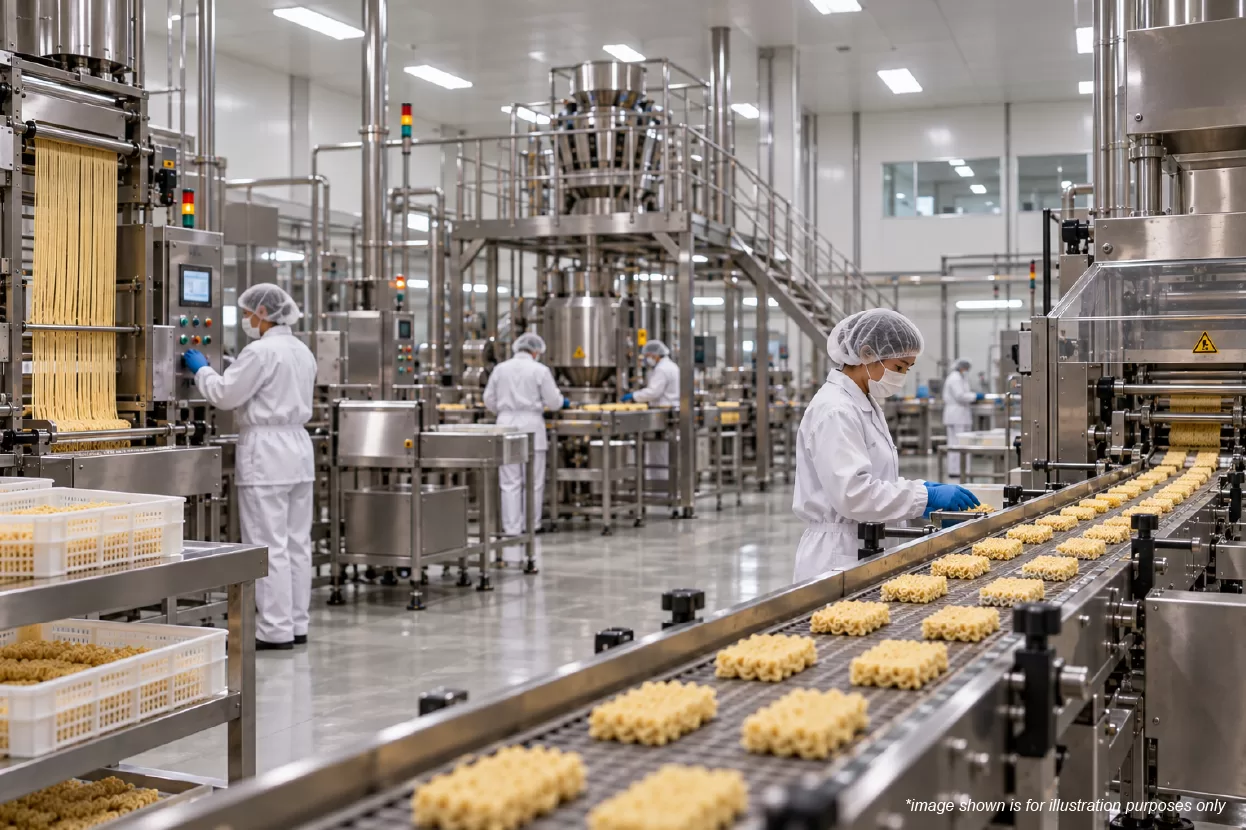
Certification attaches to the facility, not only to the product
This distinction matters more than most buyers realise when they are comparing manufacturers.
If you contract a facility that does not hold halal certification, you cannot obtain a halal certified product from it, regardless of how carefully you specify your ingredients. The certification framework assesses the production environment, not just the formulation.
The practical consequence is that your choice of manufacturer determines your addressable market before you have written a word of packaging copy. A brand that selects a non certified facility on price has, without necessarily realising it, closed off Indonesia, Brunei, the Gulf states, and a significant share of retail in Malaysia and Singapore. Reversing that decision later means re-developing the product with a different manufacturer, which means new film, new seasoning development and a new production run.
If halal markets are anywhere in your three year plan, the certification question belongs at the start of your manufacturer selection process, not at the end.
Vit's has operated as a halal certified manufacturer since the company was established in 1980, which means certification is not a capability we added to serve export demand. It is how the facility has been built and run from the beginning, and it applies to everything produced here, including OEM and private label work for partner brands.
Why the certifying body matters as much as the certificate
Here is the part that catches experienced exporters out. Not all halal certificates carry equal weight, and recognition is granted body by body rather than country by country.
Importing authorities maintain their own lists of foreign halal certification bodies whose certificates they will accept. A certificate issued by a body that is not on the relevant list may be worth very little for market access purposes, even if the underlying production standards are sound.
Recognition is also usually granted by product category. A certification body recognised for food may not be recognised for cosmetics or pharmaceuticals, and a certificate has to cover the correct scope for the product actually being shipped.
This is why the question to ask a prospective manufacturer is not "are you halal certified" but "which body certifies you, what scope does that certification cover, and is that body recognised in the markets I am targeting."
Malaysia's federal halal authority, JAKIM, is among the more widely recognised halal certification authorities internationally, and Malaysian halal certification operates against a published national standard governing halal food production, preparation, handling and storage. For exporters, that recognition translates into a procedural advantage in several markets rather than merely a reputational one.
Vit's is certified under the Malaysian halal framework, which is the practical reason our OEM and private label partners are able to enter halal markets on the strength of documentation that already exists rather than certification that has to be created.
The Indonesia deadline: a live case study
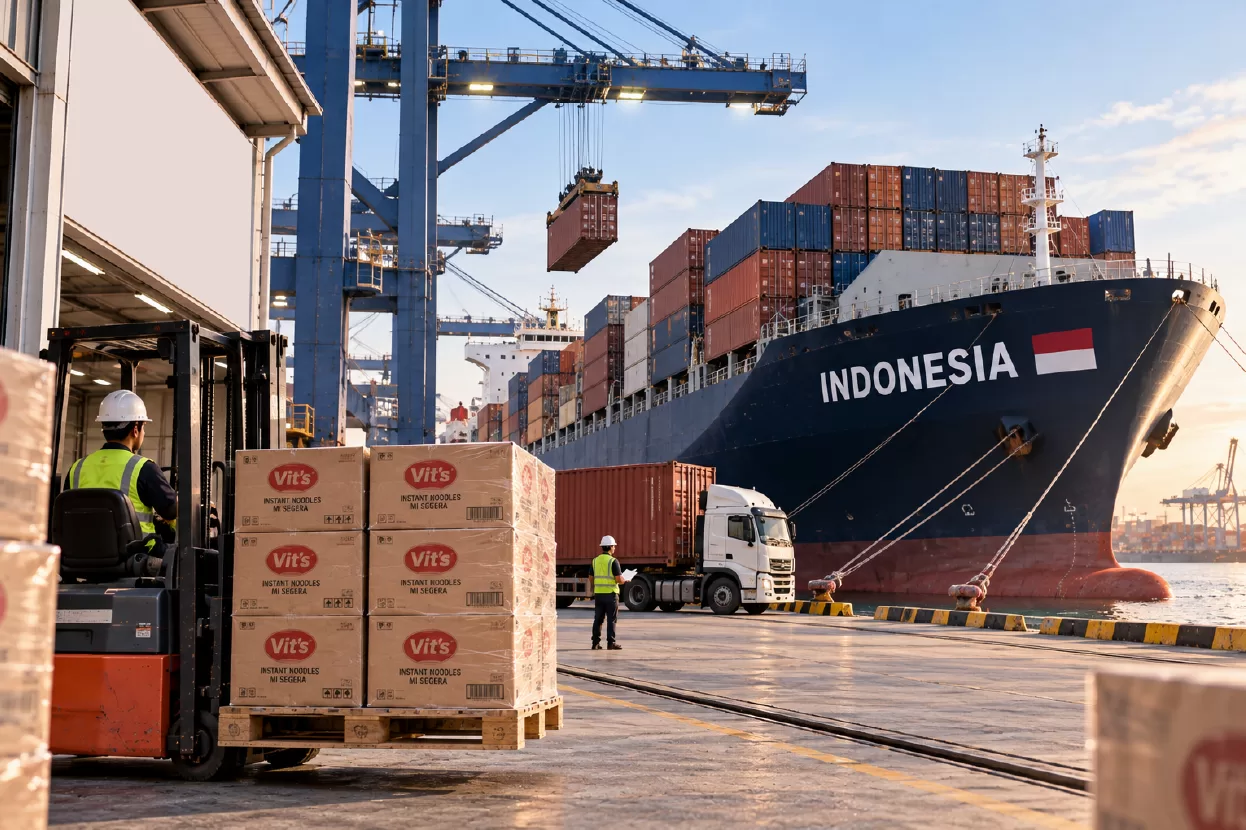
Indonesia offers the clearest current illustration of how this works in practice, and the timing is immediate.
Under Indonesia's Halal Product Assurance framework, halal certification is mandatory for imported food and beverages, with a compliance deadline of 17 October 2026 and active market supervision beginning the following day. Products without valid certification and registration face customs delays, removal from shelf and administrative sanctions. Indonesian e-commerce platforms have also been tightening their requirements for halal registration numbers in affected categories. The requirement sits under Indonesia's Halal Product Assurance Law and Government Regulation 42 of 2024, and is administered by BPJPH, Indonesia's Halal Product Assurance Organizing Agency, which operates under the Ministry of Religious Affairs.
For a brand exporting into Indonesia, two routes exist.
The full certification route applies where no recognised foreign certificate is held. It involves building a halal assurance system, filing through Indonesia's SIHALAL portal, an on site audit by an accredited inspection body, a fatwa from the Indonesian Ulema Council, and finally certificate issuance by BPJPH. Industry guidance commonly puts this at three to six months once documentation and audit scheduling are accounted for.
The foreign certificate registration route applies where the product already holds a certificate from a body that BPJPH recognises. JAKIM holds such an arrangement with BPJPH, formalised through a government to government memorandum of cooperation on mutual recognition of halal certificates, which means product manufactured under Malaysian halal certification can generally be registered rather than re-certified. The registration step still has to be completed through SIHALAL by the Indonesian importer, and the Indonesian halal mark has to appear on packaging, but the full audit process is avoided.
The difference between those two routes is weeks against months. For a brand trying to hold a launch window or protect existing distribution, that gap is material.
This is the most concrete example of why manufacturer location and certification status are commercial decisions rather than administrative ones. A brand producing with Vit's in Malaysia approaches the Indonesian market holding a certificate from a recognised authority. The same brand producing in a market without that recognition approaches it from the beginning of a three to six month process.
Two caveats are worth stating plainly. First, recognition has to cover your specific product category, so the scope of the certificate needs checking against the product actually being shipped. Second, requirements in this area have been changing and continue to evolve, so current requirements should be confirmed directly with BPJPH or a qualified compliance adviser rather than taken from any article, including this one. The dates and routes described above reflect the position at the time of writing.
What this means for where you manufacture
Indonesia is the most immediate example but not the only one. Halal certification affects market access across the Gulf states, Brunei, and increasingly in markets where halal functions as a trust and quality signal rather than a legal requirement.
That last point is worth sitting with, because it is often underestimated. In the UK, Europe, Australia and North America, halal certification is not legally required, but it opens distribution into a consumer segment that is younger and growing faster than the general population, and it is increasingly read by non Muslim consumers as an additional layer of supply chain scrutiny rather than a religious marker alone.
The commercial implication is straightforward. Manufacturing in a certified Malaysian facility does not limit your product to Muslim markets. It widens the set of markets available to you without narrowing any of them, and it does so without adding cost to the product, because the certification sits with the manufacturer rather than being billed per order.
If your route to market is domestic and non halal only, this may not be a deciding factor. If there is any prospect of export, it almost certainly is. Our guide on how to export your own noodle brand from Malaysia covers the wider documentation picture that sits alongside this.
Frequently Asked Questions
Does halal certification restrict my product to Muslim markets?
No. Certification widens the markets available to you rather than narrowing them. Halal certified product can be sold in any market, and in several non Muslim majority markets the certification is increasingly read as an additional supply chain assurance.
Can a non certified manufacturer produce halal certified product for my brand?
No. Halal certification assesses the production facility, its suppliers, equipment, storage and procedures, not just the recipe. If the facility is not certified, the finished product cannot be certified.
Is Vit's halal certified?
Yes. Vit's has been producing halal certified instant noodles in Malaysia since 1980, supplying both our own brand and OEM and private label partners in domestic and export markets.
Talk to us about your export requirement
If you are planning a private label or OEM instant noodle project with export markets in mind, halal certification is one of the decisions worth settling before specification rather than after.
Vit's has been manufacturing halal certified instant noodles in Malaysia since 1980. We can provide certification documentation for your import filings at the enquiry stage rather than after an order is placed, so you can assess market access before committing to anything. You can read more about our instant noodle manufacturing capabilities, or about minimum order quantities for OEM and private label projects. Get in touch with your product concept and target markets and our team will come b