
The global demand for instant noodles continues to grow, creating opportunities for retailers, distributors, and food entrepreneurs to launch their own private label noodle products. However, bringing a noodle concept to market requires far more than developing a flavour. From product formulation and manufacturing to regulatory testing and shelf life validation, brands must navigate a complex development process before a product is ready for commercial production.
Instant noodles remain one of the most widely consumed convenience foods in the world. Their long shelf life, affordability, and ease of preparation have made them a staple in households across many countries. For consumers with busy lifestyles, instant noodles offer a reliable meal solution that can be prepared quickly while still providing satisfying flavours and textures.
This strong consumer demand has encouraged many businesses to explore opportunities within the instant noodle category. Retailers are expanding their private label offerings, food distributors are diversifying their product portfolios, and emerging brands are seeking ways to enter the packaged food market. Despite the apparent simplicity of the product, developing and scaling an instant noodle brand involves a complex combination of technical expertise, manufacturing capability, and regulatory compliance.
Understanding how the development process works can help brands make informed decisions when planning their entry into the market.
Understanding the Market Opportunity
The continued growth of instant noodles is closely linked to changes in consumer lifestyles. Urbanisation and demanding work schedules have increased the need for convenient meals that can be prepared quickly without sacrificing taste or satisfaction. Instant noodles meet this need by offering a flexible base that consumers can easily customise with additional ingredients such as vegetables, eggs, or proteins.
For brands, this category offers an attractive entry point into the packaged food industry because consumer familiarity with the product is already well established. Unlike entirely new food categories that require extensive consumer education, instant noodles benefit from decades of market acceptance. This allows brands to focus on product differentiation through flavour innovation, packaging design, and branding.
Retailers in particular have recognised the potential of private label noodles as part of broader strategies to strengthen customer loyalty and improve margins. By introducing their own branded products, retailers can create unique offerings that differentiate them from competitors while maintaining greater control over pricing and product positioning.
However, entering a mature and competitive category requires more than a strong brand concept. Consistent product quality and reliable supply are essential to building long term consumer trust.
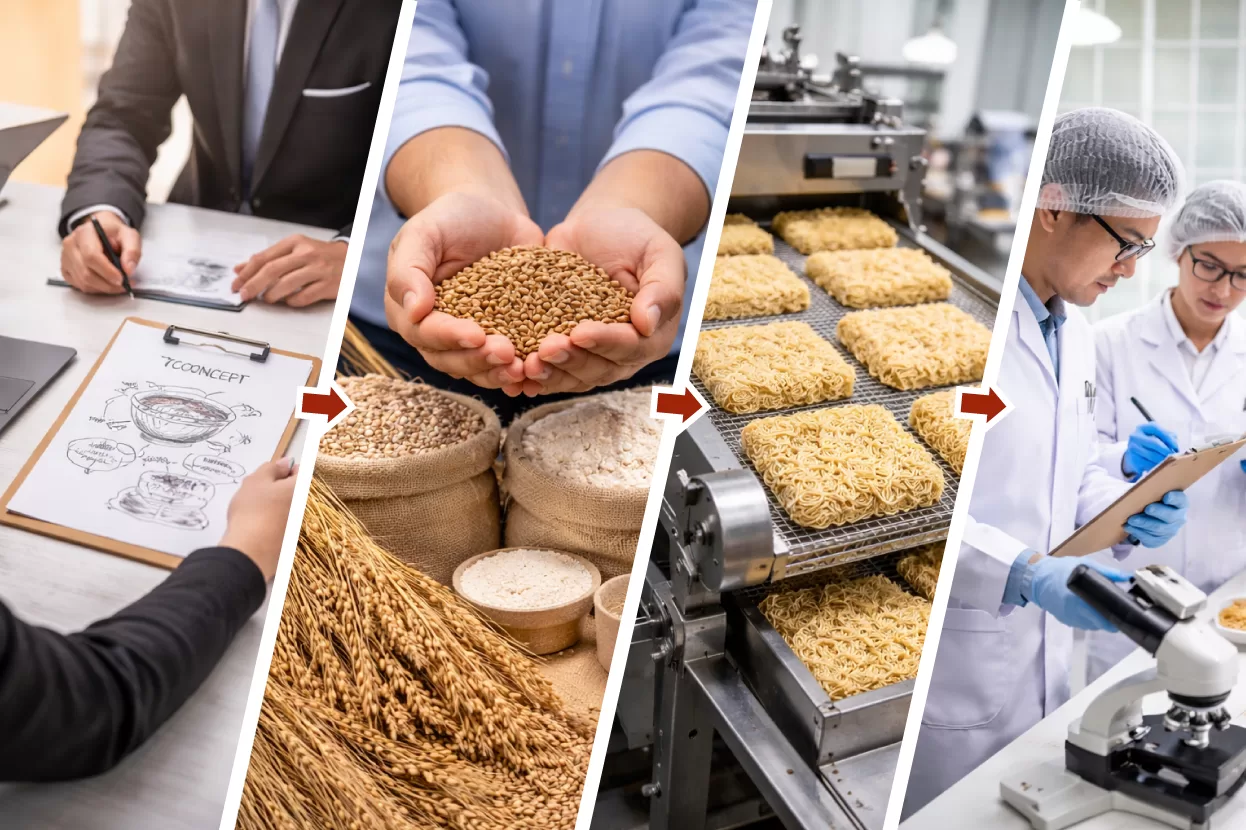
Product Development Building the Right Foundation
Developing an instant noodle product involves a range of technical considerations that extend far beyond selecting noodle product involves a range of technical considerations that extend far beyond selecting a flavour profile. The quality of the noodles themselves depends heavily on formulation and processing methods.
Wheat flour forms the foundation of most noodle products, and its characteristics influence the final texture. Protein content affects gluten formation, which determines the elasticity and firmness of the noodles. Achieving the right balance is essential because consumers expect noodles that remain springy and enjoyable after cooking.
The mixing stage requires careful control of water absorption. Insufficient moisture can result in brittle dough that is difficult to process, while excessive moisture can weaken the dough structure and affect the final noodle texture.
After mixing, the dough is rolled into sheets and cut into strands of consistent thickness. These strands are steamed to stabilise their structure before being dried or fried to reduce moisture levels and extend shelf life. Each stage requires precise control over temperature, humidity, and timing to maintain consistent quality.
Flavour development introduces another layer of complexity. Seasoning powders and soup bases must be formulated to remain stable during storage while delivering balanced flavour when prepared. This stage often involves multiple rounds of testing and refinement before the final product is approved.
Ingredient Sourcing and Supply Stability
While formulation determines the structure and flavour of the noodles, ingredient sourcing plays an equally important role in maintaining consistency at scale.
Wheat flour quality can vary depending on crop conditions, milling techniques, and protein levels. These variations influence dough behaviour during production and can ultimately affect noodle texture. Seasoning ingredients must also be carefully sourced to ensure consistent flavour profiles across production batches.
Manufacturers therefore rely on established supplier networks to maintain stable ingredient quality. Long term relationships with trusted suppliers allow manufacturers to maintain strict specifications while also reducing the risk of supply disruptions.
For brands entering the noodle market, working with an experienced manufacturing partner provides access to these supplier networks. This simplifies the procurement process and ensures that ingredient quality remains consistent as production volumes increase.
Manufacturing Technology and Production Efficiency
Instant noodle production requires specialised equipment and controlled processing environments. The manufacturing process begins with dough mixing, where flour and water are combined to form a consistent base. The dough is then rolled into thin sheets and cut into strands that form the noodle shape.
These strands pass through a steaming stage that partially cooks the noodles and stabilises their structure. After steaming, the noodles are either dried or fried to remove moisture and extend shelf life.
Once the noodles have cooled, they move to the packaging stage where seasoning sachets or flavour packets are added according to the product design. Packaging systems must maintain hygiene standards while protecting the product from moisture and contamination.
Modern manufacturing facilities rely on automated production lines to ensure consistency and efficiency. Automation allows manufacturers to maintain strict control over production conditions while producing large volumes within tight timelines.
For brands planning to distribute through supermarkets or international markets, this level of production capability is essential.
Food Safety and Regulatory Compliance
Food safety remains a central responsibility in the food manufacturing industry. Consumers expect packaged foods to meet strict safety standards, and manufacturers must implement comprehensive quality assurance systems to maintain these standards.
Quality control procedures typically involve testing raw materials, monitoring production conditions, and inspecting finished products before distribution. Traceability systems are also implemented to ensure that ingredients can be tracked throughout the production process.
Regulatory requirements can vary between countries, particularly when products are exported to international markets. Different regions impose specific rules regarding ingredient approvals, nutritional labelling, and documentation.
Manufacturers with experience in international distribution are often better equipped to guide brands through these regulatory requirements and ensure that products meet all necessary standards before entering the market.
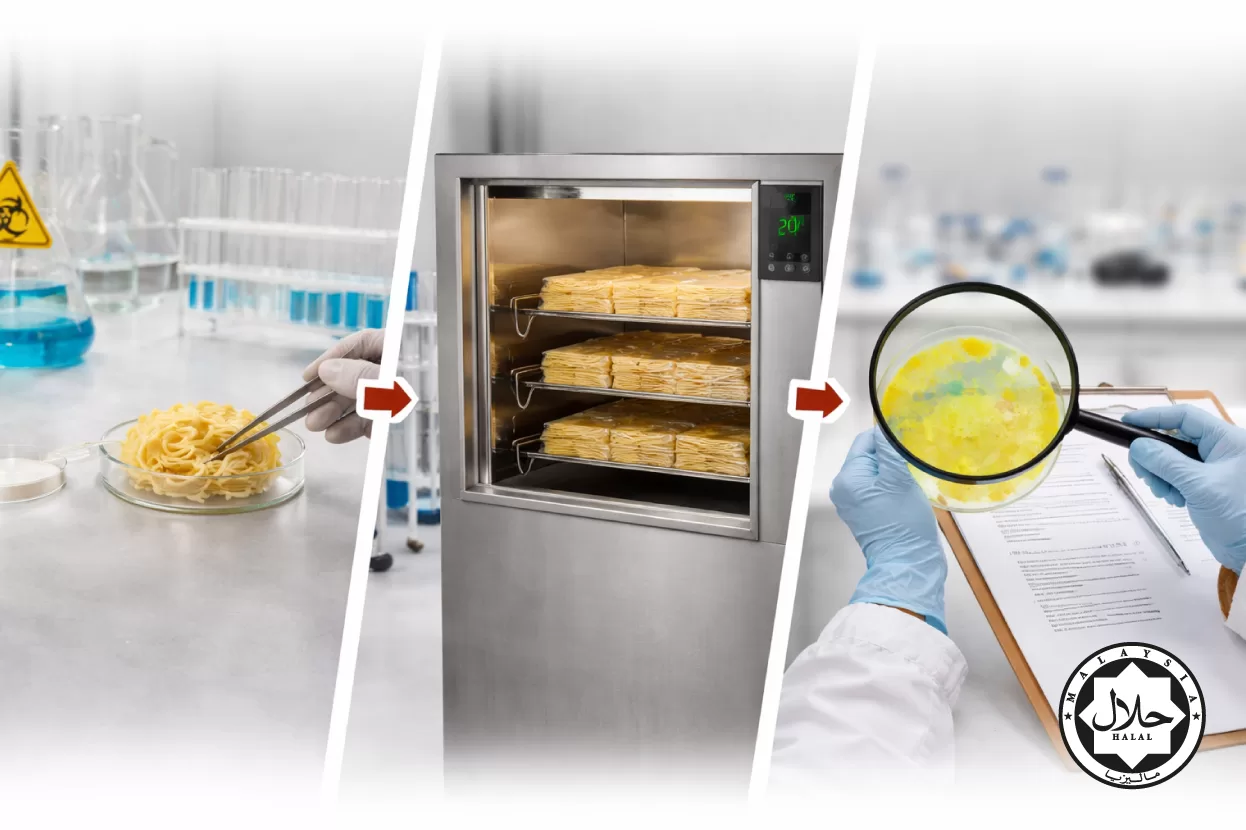
Product Testing, Shelf Life Validation, and Certification
Before a new noodle product can be commercially launched, several validation processes must be completed to ensure compliance with regulatory requirements and product safety standards.
One of the most important steps is nutritional analysis. Food regulations in most countries require verified nutrition information to be printed on packaging. Instead of estimating these values, manufacturers submit finished product samples to accredited laboratories for testing. The laboratory analyses the product composition and provides verified nutritional data.
For brands targeting international markets, laboratories can generate reports formatted according to different regulatory standards. Two commonly requested formats are the United States nutrition facts panel and the Australian nutrition information panel.
Shelf life validation is another key stage. Shelf life determines how long the product can be stored while maintaining safety and quality. For instant noodles, testing focuses on microbial stability as well as monitoring changes in flavour, aroma, and texture during storage.
Manufacturers often conduct accelerated shelf life testing to estimate long term stability. This method simulates extended storage conditions within a shorter testing period. For example, if a noodle product is intended to have an 18 month shelf life, accelerated testing may take approximately seven months to confirm microbial stability and product quality.
Halal certification is also an important consideration for brands targeting Muslim consumer markets. In noodle manufacturing, halal certification can generally be applied under two different arrangements.
Under the first arrangement, halal certification is applied under the manufacturer. The manufacturing facility holds the certification and products produced within that facility fall under this approval. In this case, the packaging usually includes the name and details of the manufacturer as part of the certification requirements.
The second arrangement involves halal certification applied under the customer’s brand. When certification is associated with the brand owner, the packaging does not necessarily need to display the manufacturer’s details. This option allows brands greater flexibility in managing their product identity.
Taking all of these stages into account, the overall development timeline for launching a new instant noodle product typically ranges between six and twelve months. This timeframe allows sufficient time for formulation, flavour development, packaging design, laboratory testing, certification approvals, and production planning.
Scaling Production for Market Growth
Moving from product development to large scale production introduces additional operational challenges. Retail distribution often requires consistent production volumes and reliable delivery schedules.
Maintaining flavour consistency becomes more complex as batch sizes increase. Ingredient sourcing must also scale accordingly to support higher production volumes without affecting quality.
Production planning therefore becomes critical. Manufacturers must coordinate ingredient procurement, production capacity, and packaging logistics to ensure that products reach the market on time.
Manufacturers with scalable facilities and automated production lines are better equipped to support brands during periods of rapid growth.
Frequently Asked Questions About Launching Instant Noodle Products
How long does it take to develop a private label instant noodle product?
The typical development timeline ranges between six and twelve months. This includes product formulation, flavour development, packaging design, laboratory testing, certification approvals, and production planning before commercial launch.
How is the shelf life of instant noodles tested?
Manufacturers usually conduct accelerated shelf life testing to simulate long term storage conditions. For products targeting an eighteen month shelf life, the testing process generally takes around seven months to confirm microbial stability and product quality.
Do instant noodle products require nutritional laboratory testing?
Yes. Finished product samples are typically submitted to accredited laboratories to obtain verified nutritional information. These results are used to generate official nutrition panels such as the United States nutrition facts panel or the Australian nutrition information panel.
Can private label noodle products obtain halal certification?
Yes. Halal certification can be applied under the manufacturer or under the brand owner, depending on the certification structure and labelling requirements.

Turning a Noodle Concept into a Market Ready Product
Launching an instant noodle brand may begin with a simple idea, but transforming that concept into a successful product requires significant technical expertise and operational capability. From formulation and ingredient sourcing to manufacturing technology and regulatory compliance, each stage plays an important role in ensuring product quality and reliability.
For businesses entering the instant noodle market, partnering with an experienced manufacturer can significantly simplify the process from conceVit’s Noodlesction.
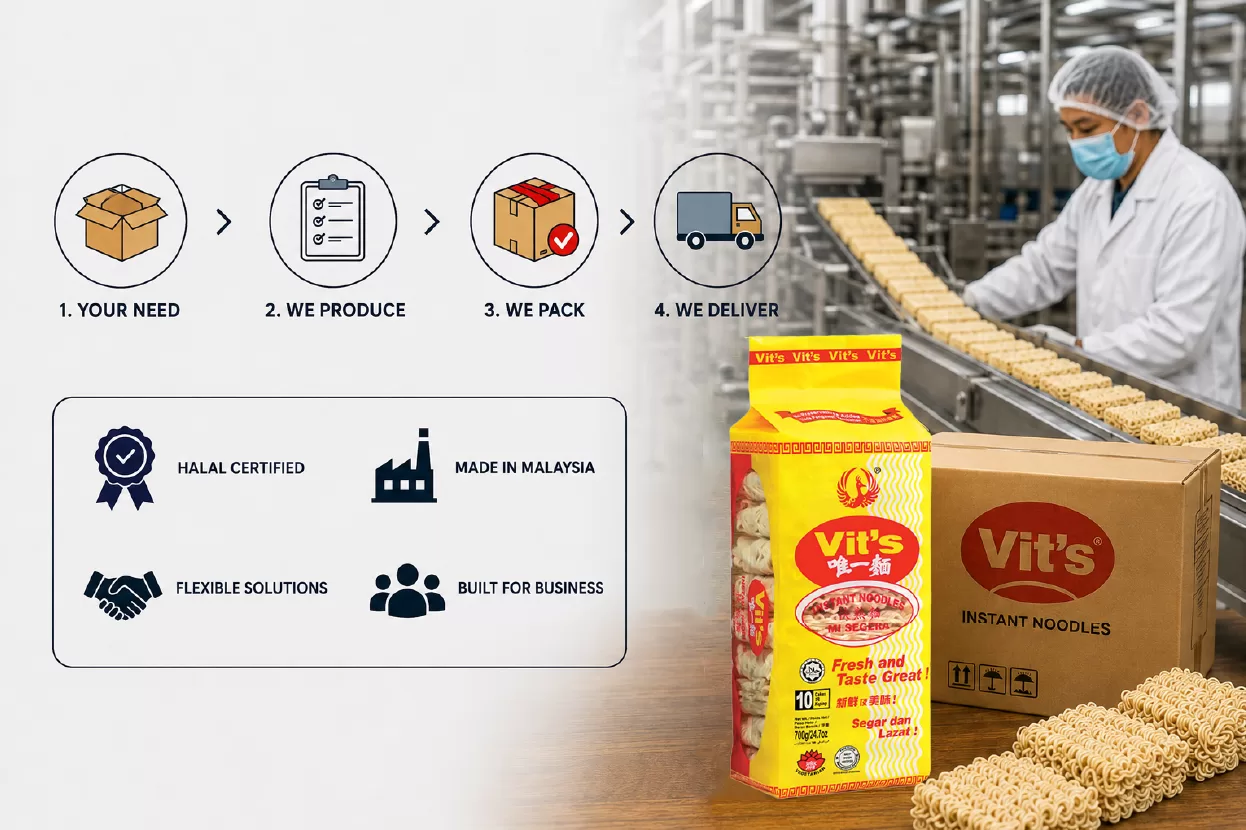
With decades of noodle manufacturing experience, Vit’s Noodles supports brands through a comprehensive one stop private label and OEM solution. From product development and flavour customisation to manufacturing, packaging, and regulatory guidance, Vit’s works closely with partners to bring new noodle products to market efficiently and reliably.
As global demand for convenient foods continues to grow, brands that combine strong market insight with experienced manufacturing partnerships will be well positioned to succeed in the competitive instant noodle industry.