
Growing a private label brand can be one of the most exciting opportunities for businesses in today’s competitive market. Private label products allow brands to create tailored offerings under their own name and connect more deeply with customers. Traditionally, brands that wanted to grow quickly had to invest in their own factory or production facility. That barrier made growth slow and expensive. Today the market has changed. Brands can grow private label product lines without owning a factory. With the right strategy and the right partner, brands can innovate, scale, and reach new audiences more efficiently.
In this playbook we explore the key elements of private label growth, current trends in the industry, a real world case study, and actionable tips that any brand can apply. We also show how Vits Noodle helps brands solve common pain points while maintaining their independence and creative control.
Understanding Private Label Growth
Private label products are goods that are manufactured by a third party and sold under a retailer or brand owner name. Instead of investing in factory infrastructure brands work with experienced manufacturers that handle production, quality control, and regulatory compliance. This allows brands to focus on what matters most for growth like marketing, customer experience, packaging, distribution, and long term strategy.
The biggest advantage of private label growth is that brands can innovate rapidly and test new products without large upfront investment. This model also gives businesses flexibility to adapt to customer demand and marketplace shifts. But even with these advantages there are common pain points brands face such as:
- Finding manufacturing partners they can trust
- Ensuring consistent quality
- Managing supply chain complexity
- Balancing inventory with demand
- Innovating without operational expertise
A strategic plan helps brands overcome these challenges while using private label as a growth engine.
Industry Trends Shaping Private Label Growth
Before outlining the playbook it helps to understand the broader trends influencing private label success.
Consumer Demand for Authenticity
Consumers today want products that feel personal and authentic. They want brands that reflect their values. Products with unique flavors, ingredients or stories are winning attention. For food products like noodles consumers increasingly seek transparency and quality.
Faster Innovation Cycles
Technology and market data allow brands to test trends more rapidly. Shorter innovation cycles mean brands can launch, learn, and adjust faster than ever before. This is ideal for private label models because it reduces risk and increases speed to market.
Preference for Local or Specialized Products
Many customers now prefer products that feel local or artisanal even when they are manufactured at scale. This creates an opportunity for smaller brands to grow with private label products that appeal to niche audiences.
E Commerce and Direct to Consumer Growth
Online shopping has changed the way products reach customers. Private label brands can use e commerce platforms to gain market share without traditional retail barriers.
Cost Conscious Consumers
Economic pressures have made consumers more cost sensitive. Private label products are often positioned as high quality but lower cost alternatives to national brands. This resonates with value driven shoppers.
Each of these trends shows why private label growth is not only possible without owning a factory but also strategically advantageous when executed well.

A Strategic Playbook for Private Label Success
Here we outline the essential steps that brands should follow to grow private label products without owning a factory.
1. Define Your Brand Vision and Value Proposition
Understanding why your brand exists and what differentiates your product is the first step. Ask yourself:
- What problem does my product solve?
- Who is my target customer?
- What values does my brand represent?
- Why will customers choose my product over others?
This step ensures that every decision you make aligns with your brand identity.
2. Conduct Market and Competitor Research
Before launching any new product it is essential to understand your target market. Look at:
- Target demographics and preferences
- Price sensitivity
- Competitor products and positioning
- Distribution channels competitors use
- Customer feedback on similar products
This research guides product formulation, pricing, and marketing strategy.
3. Choose the Right Manufacturing Partner
This is one of the most critical decisions. An ideal manufacturing partner should offer:
- Consistent quality standards
- Flexibility in production capacity
- Transparency and communication
- Regulatory compliance expertise
- Ability to scale with demand
Instead of owning a factory brands can partner with manufacturers who already excel in production and quality. This saves millions in capital expenditure and speeds up time to market.
4. Develop Custom Formulations and Packaging
Work closely with your manufacturing partner to develop products that fit your brand. This includes:
- Recipe development
- Ingredient selection
- Custom flavour profiles
- Packaging design aligned with brand identity
At this stage, you are creating something unique that consumers will remember.
5. Pilot, Test, and Refine
Never assume a product will perform perfectly on the first launch. Instead:
- Start with a pilot run
- Gather customer feedback
- Review sales performance
- Adjust formulation, packaging, or positioning
This iterative approach significantly increases your chances of success before scaling.
6. Plan Distribution and Sales Strategy
Effective distribution is essential to driving growth. Consider which channels are most relevant:
- E-commerce platforms
- Retail partnerships
- Specialty stores
- Subscription services
- Pop up events or local markets
Each channel has different cost structures and audience reach.
7. Develop Marketing That Resonates
Create storytelling and promotional campaigns that reflect your brand identity. Whether through social media, influencers, email, or content marketing make sure your messaging is consistent, engaging, and relevant.
8. Scale with Data and Demand Forecasting
As your product gains traction, use data to forecast demand. Adjust production schedules, inventory levels, and marketing campaigns based on real performance metrics. This prevents overstocking or stockouts and improves profitability.
Case Study: A Health Focused Noodle Brand
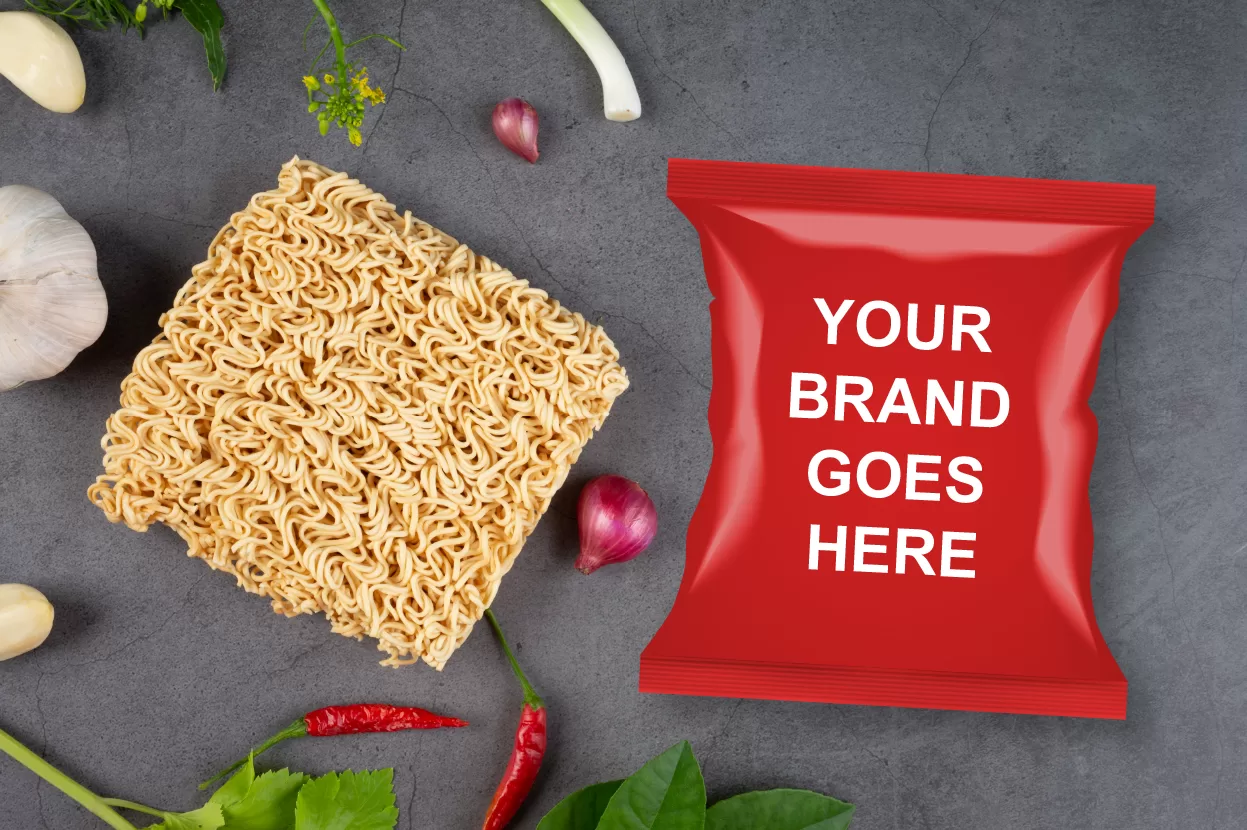
Situation: A health focused brand wanted to launch a line of nutrient rich noodles with high fibre and protein targeted at health enthusiasts. They did not want to invest in their own factory but needed consistent quality and bespoke formulations.
Action: The brand partnered with Vit's Noodles to access production expertise and reliable facilities. Together, we developed custom formulations using high protein and functional ingredients. Vits Noodle handled production, quality checks, and regulatory compliance, while the brand focused on testing the product with customers and preparing their online launch.
Result: The product launched online through e-commerce channels. Within six months, the brand saw double-digit growth and strong repeat purchases due to consistent product quality. The strategic partnership allowed the brand to innovate without operational burden.
Actionable Tips for Every Brand
Whether you are just starting or scaling a private label product line, here are practical tips to implement right away:
- Focus on product quality: Your product must meet or exceed customer expectations. Quality drives repeat purchases and positive word of mouth.
- Build strong communication channels: Open and regular communication with your manufacturing partner prevents misunderstandings and improves outcomes
- Use data to guide decisions: Track sales performance, customer feedback, and inventory levels. Data informs smarter decisions.
- Plan for risk and contingencies: Supply chain delays, ingredient price changes, and other disruptions happen. Have contingency plans and clear communication with partners.
- Invest in packaging that tells a story: Great packaging does more than protect your product. It communicates your brand values and attracts attention.
- Don’t ignore regulatory requirements: Food products require strict compliance with local regulations. Ensure your partner has expertise in this area.
- Requirements test new products in small batches first: Avoid large runs of unproven products. Pilot tests reduce risk and help refine formulations.

How Vit's Noodles Helps Brands Grow
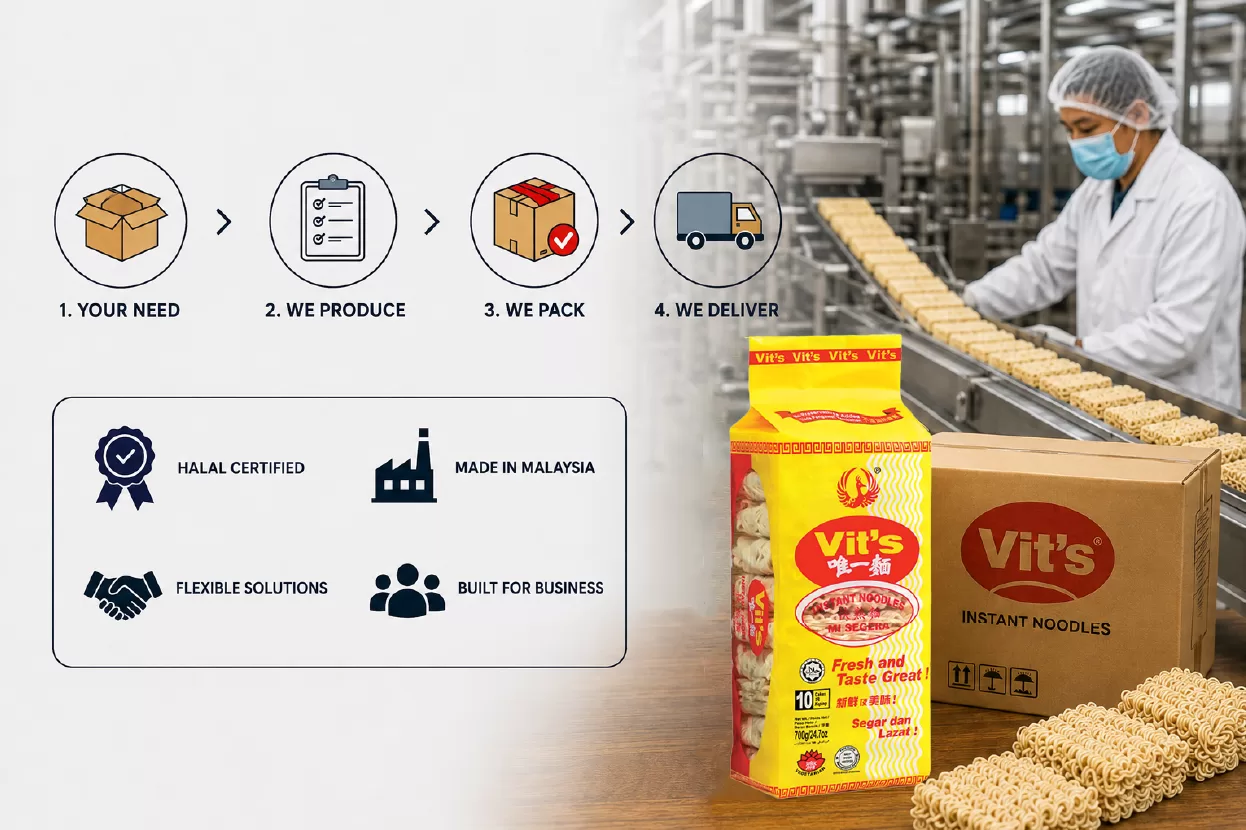
At Vits Noodles, we understand the challenges brands face when launching private label products without a factory. Our team has deep experience in noodle production, quality assurance, and market trends. We support brands in ways that make growth easier and more effective.
Here are key ways we assist:
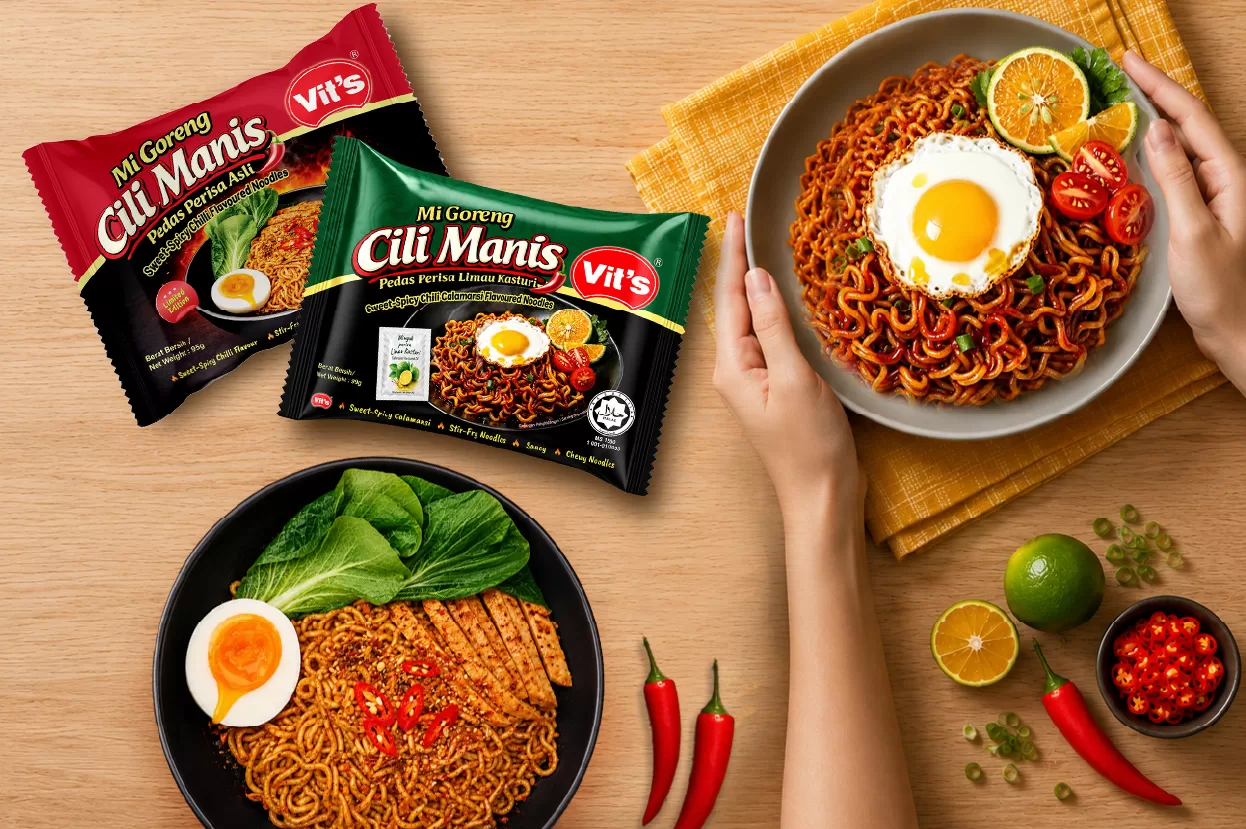
- Custom Product Development - We work with brands to create unique recipes and product variations that align with their vision.
- Scalable Production - Our facilities allow for both small pilots and large scale runs, so brands can grow as demand grows.
- Quality Assurance and Compliance - We ensure every batch meets high standards and complies with regulatory requirements.
- Flexible Order Management - Brands benefit from production flexibility that matches their business stage.
- Consultative Support - We help brands make informed operational decisions with industry insights.
Our goal is to enable brands to grow confidently with private label products while avoiding the heavy lifting of owning and operating a factory.
Conclusion
Private label growth without owning a factory is not only possible but strategically advantageous. Brands today can innovate, test quickly, and scale with lower risk. By following a clear playbook that includes strong brand vision, market research, smart partner selection, and ongoing data driven improvement any brand can succeed.
The future of private label growth belongs to brands that leverage strategic partners, focus on quality, and stay close to customer needs. With the right strategy and a partner like Vits Noodle, brands unlock new opportunities for growth and long term success.